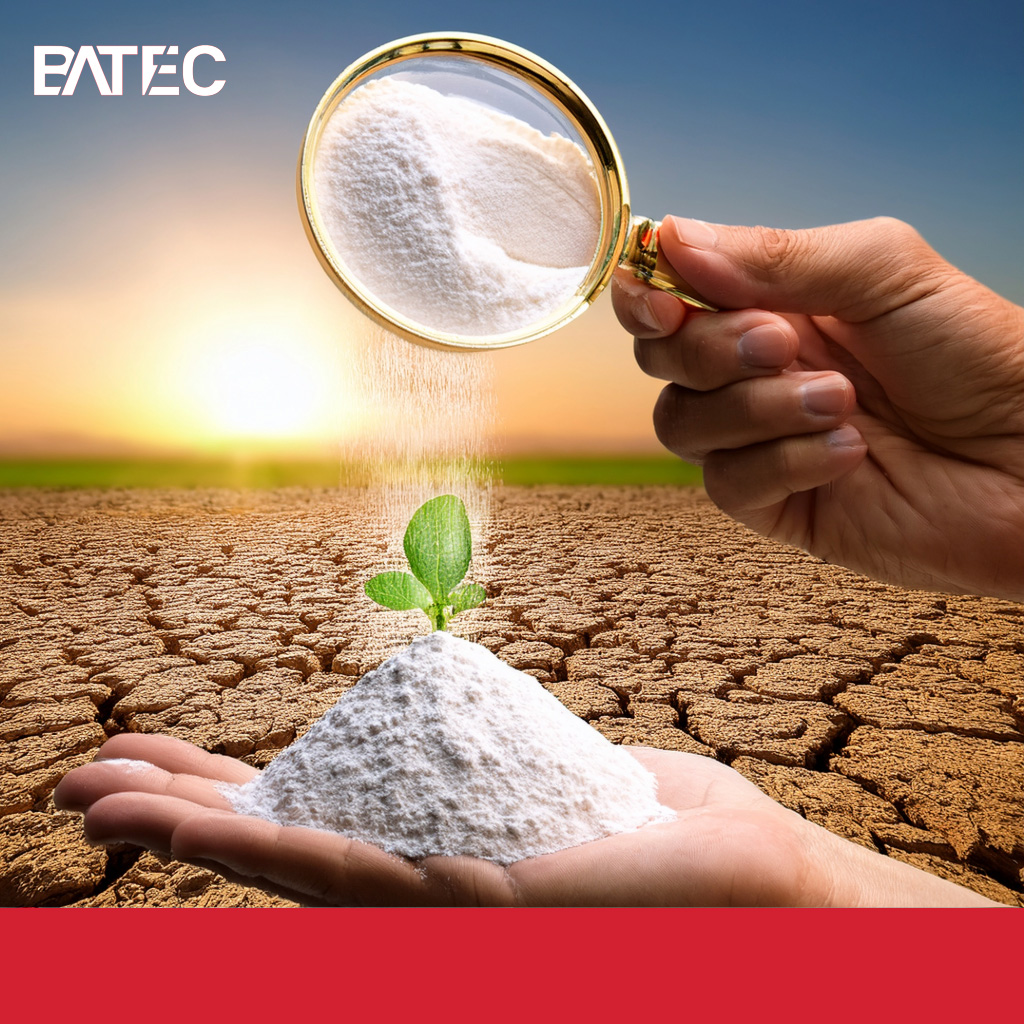
A 2025 agricultural study conducted by an international team of environmental scientists revealed that gypsum powder, traditionally used in construction, has significant potential to improve soil quality in arid and saline environments.
When applied as a soil amendment, gypsum helps reduce soil compaction, enhance water infiltration, and remove excess sodium—an issue commonly found in dryland farming regions. The study found yield improvements of up to 25% in wheat and barley crops grown in treated soils.
This dual-use potential opens new markets for gypsum producers and aligns with global sustainability goals, especially in regions facing desertification and water scarcity. It also presents an opportunity for companies to promote eco-friendly applications of their products beyond the construction sector. For a company like Batec Group, known for its high-quality gypsum powder, this research highlights a significant avenue for contributing to agricultural sustainability and expanding their product’s impact beyond building materials.
As interest in circular economy practices grows, gypsum’s role in agriculture could become a key talking point in sustainability reports and industry discussions.