
Stay informed. Stay ahead.
At BATEC Group, we believe that knowledge empowers better building. That’s why we’ve created the Knowledge Hub — your go-to resource for everything related to gypsum technology, drywall construction, and interior design innovation.
Whether you’re a contractor, architect, distributor, or DIY enthusiast, this space offers valuable insights, practical tips, and expert perspectives to help you make smarter decisions every time.
What You’ll Find Here

The Science Behind Gypsum: How It Shapes Modern Construction
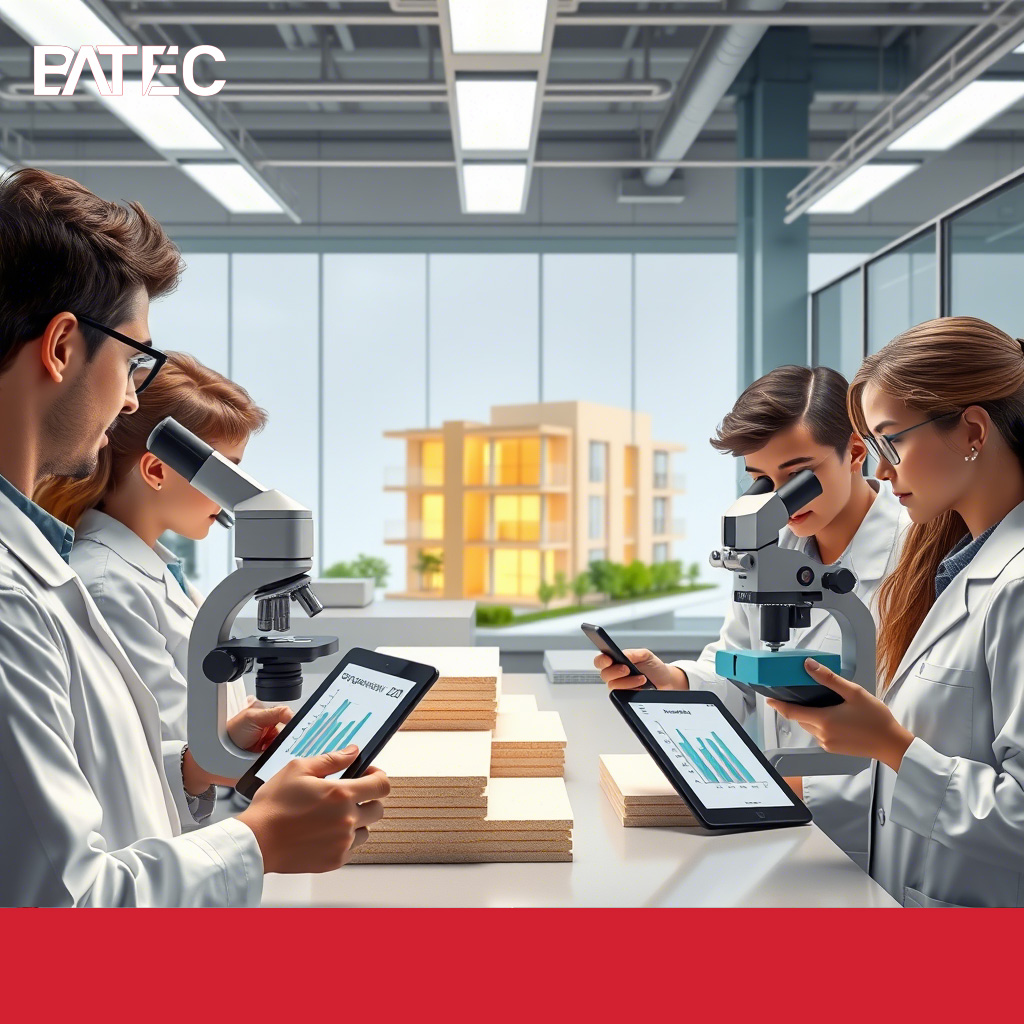
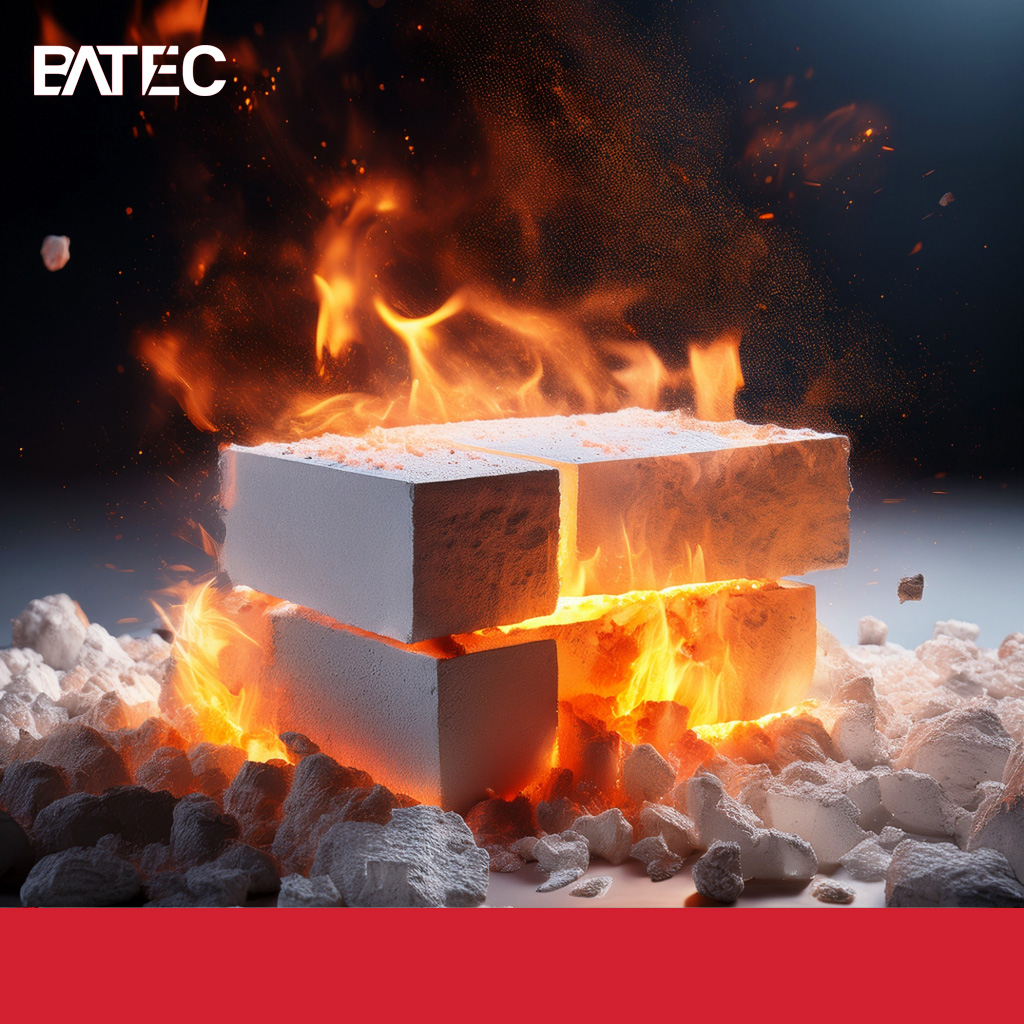
Gypsum (calcium sulfate dihydrate, CaSO₄·2H₂O) is a naturally occurring mineral that has been used in construction for centuries due to its excellent thermal and acoustic properties, fire resistance, and ease of use. When heated, gypsum loses water molecules and becomes calcium sulfate hemihydrate, commonly known as plaster of Paris, which can be rehydrated to form a solid mass. This unique chemical property allows for easy molding and shaping during manufacturing processes.
The molecular structure of gypsum contributes significantly to its performance in building applications. Its low thermal conductivity makes it an effective insulator, while its hygroscopic nature allows it to regulate indoor humidity by absorbing and releasing moisture. Globally, the majority of gypsum—well over 75%—is applied in construction, primarily in drywall, plasters, and flooring underlays, a trend consistently highlighted by organizations like the U.S. Geological Survey (USGS) in their mineral commodity reports.
In modern construction, synthetic gypsum—often derived from flue-gas desulfurization (FGD) in coal-fired power plants—is increasingly used as an eco-friendly alternative to natural gypsum. This type of gypsum has similar properties but helps reduce mining impacts and waste accumulation. Studies have shown that FGD gypsum can even improve the workability and setting time of plaster products.
From a sustainability standpoint, gypsum’s recyclability enhances its appeal. Used drywall can be processed to recover the core gypsum material, reducing landfill waste and conserving resources. As the construction industry shifts toward green building practices, understanding the science behind gypsum becomes essential for architects, contractors, and engineers seeking sustainable yet high-performance materials.
Innovations in Gypsum Board Technology: What's New in 2025?
Gypsum board technology has evolved significantly in recent years, with manufacturers introducing specialized boards tailored to specific performance requirements such as fire resistance, moisture control, sound insulation, and lightweight design. These innovations respond to growing demands for safer, more durable, and energy-efficient buildings across residential, commercial, and industrial sectors.
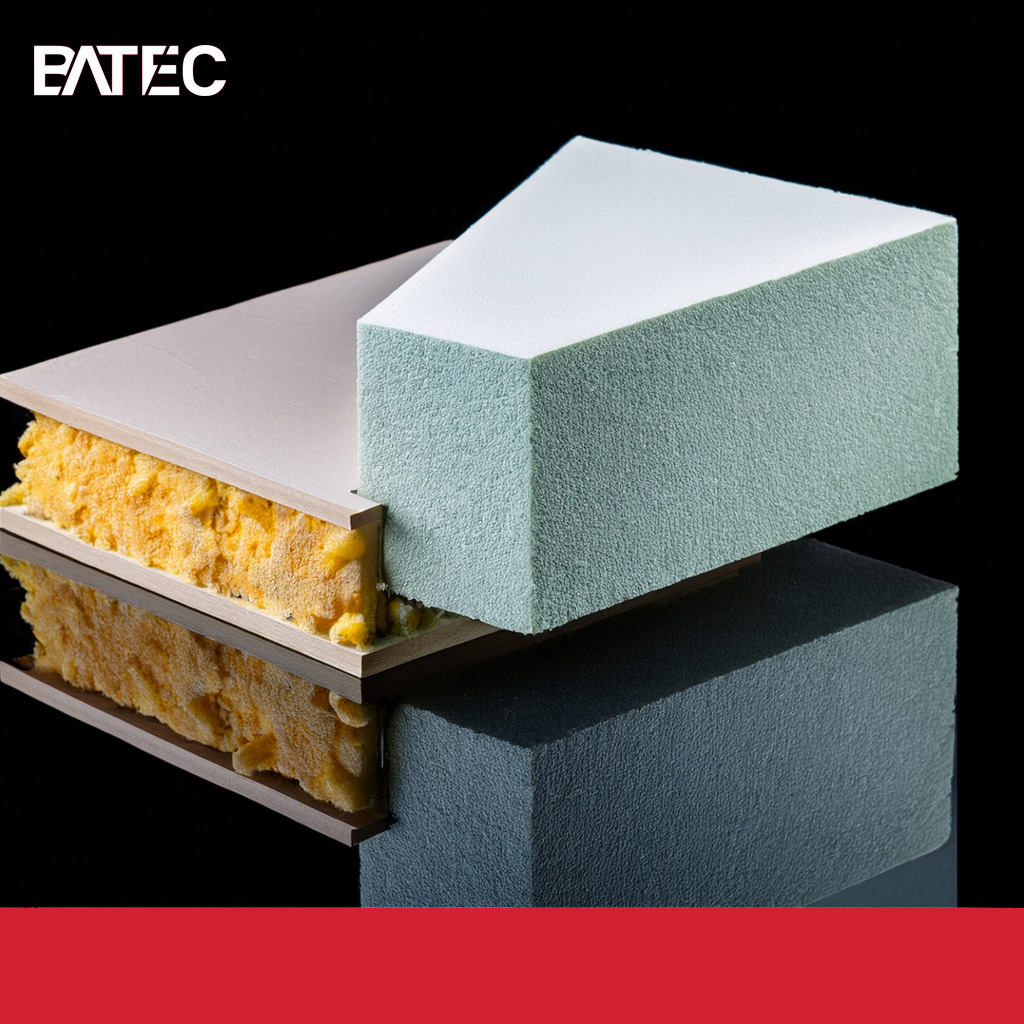
One major advancement is the development of moisture-resistant gypsum boards, often identified by a green color by some manufacturers, which are designed for use in high-humidity areas like bathrooms and kitchens. These boards feature additives and special facings that inhibit mold growth and water absorption. Similarly, fire-rated boards incorporate glass fibers and other additives to enhance fire endurance, providing critical safety benefits in multi-family housing and commercial structures.
Another emerging trend is the production of lightweight gypsum boards, which reduce structural load and ease installation without compromising strength or performance. Brands like Knauf and Saint-Gobain have introduced boards that are up to 30% lighter than standard ones, making them ideal for retrofitting projects and tall buildings where weight considerations are crucial.
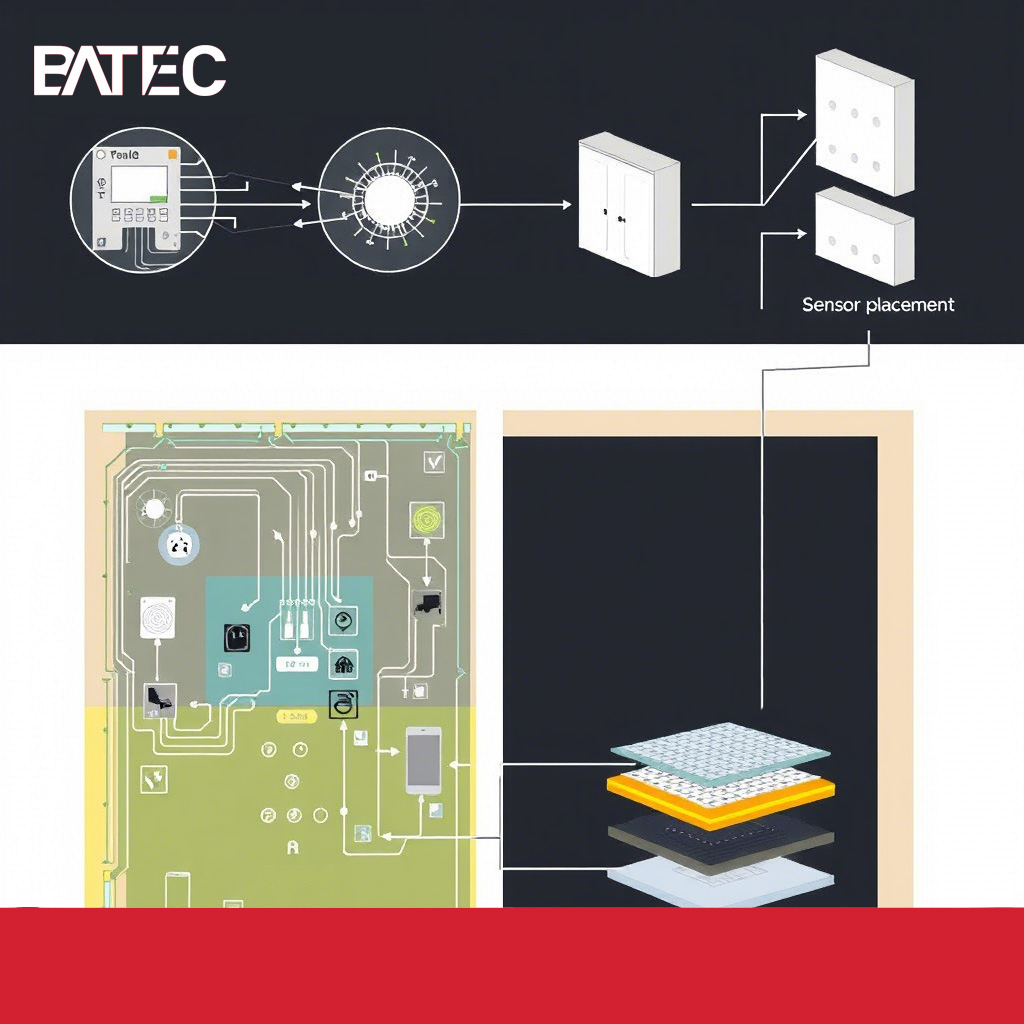
Additionally, manufacturers are integrating smart technologies into gypsum boards, such as phase-change materials (PCMs) that help regulate indoor temperatures, and embedded sensors for monitoring environmental conditions. These smart boards align with the broader movement toward intelligent and responsive building systems, enhancing comfort, efficiency, and long-term value for building owners and occupants.
From Mine to Wall: The Lifecycle of Gypsum Products
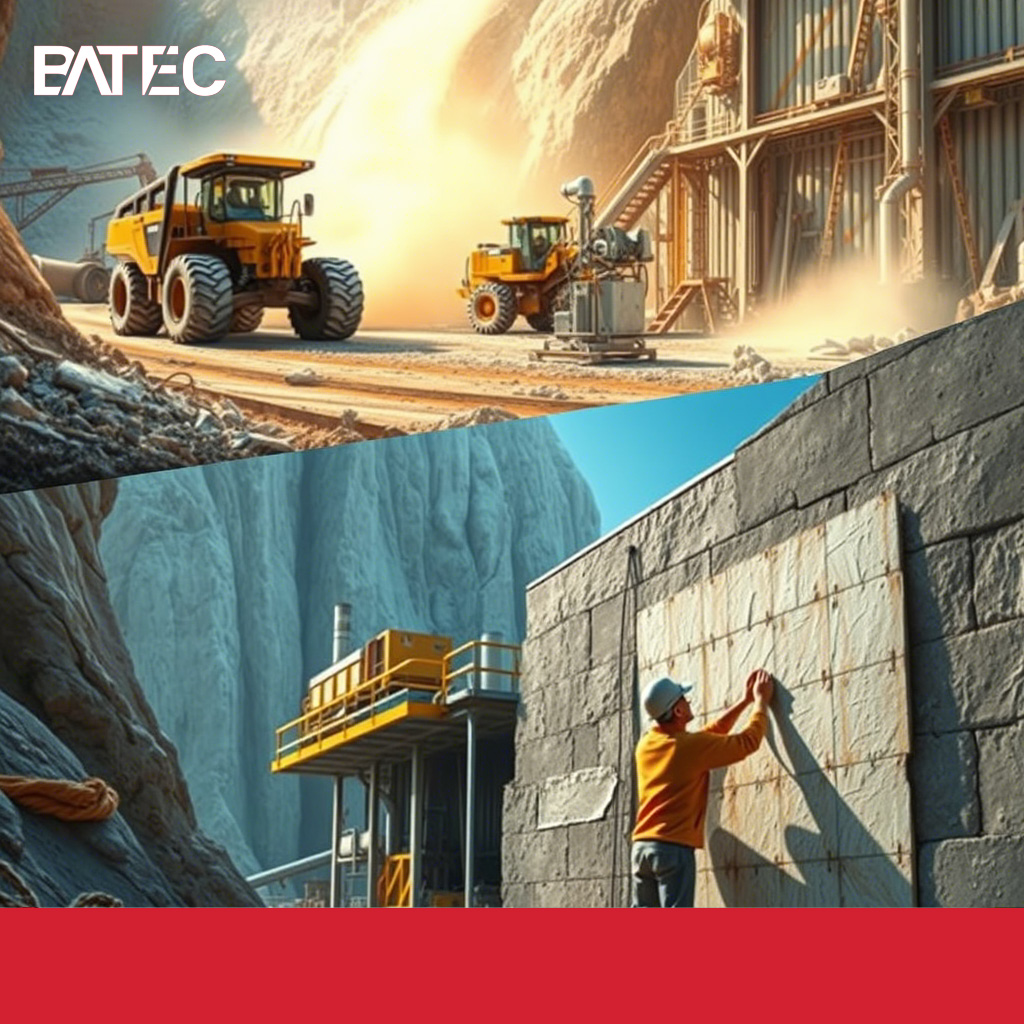
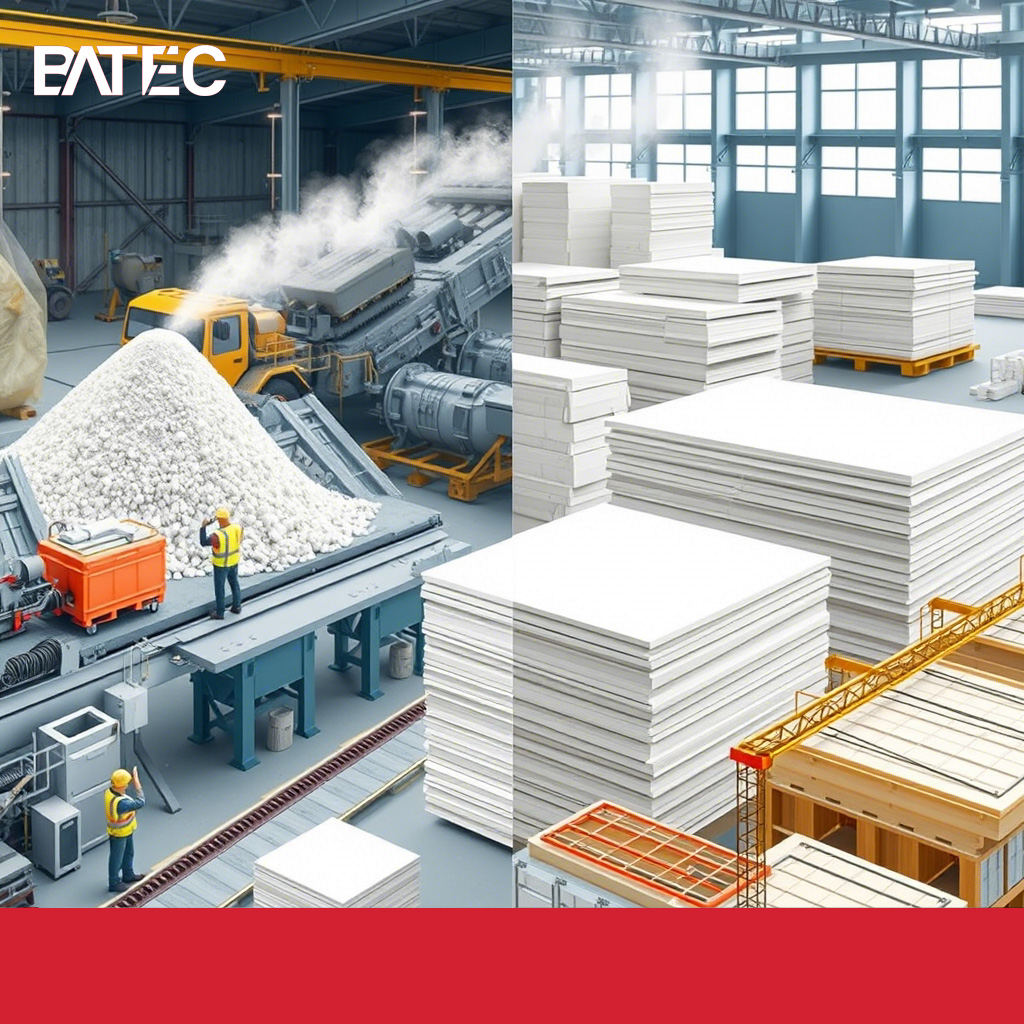
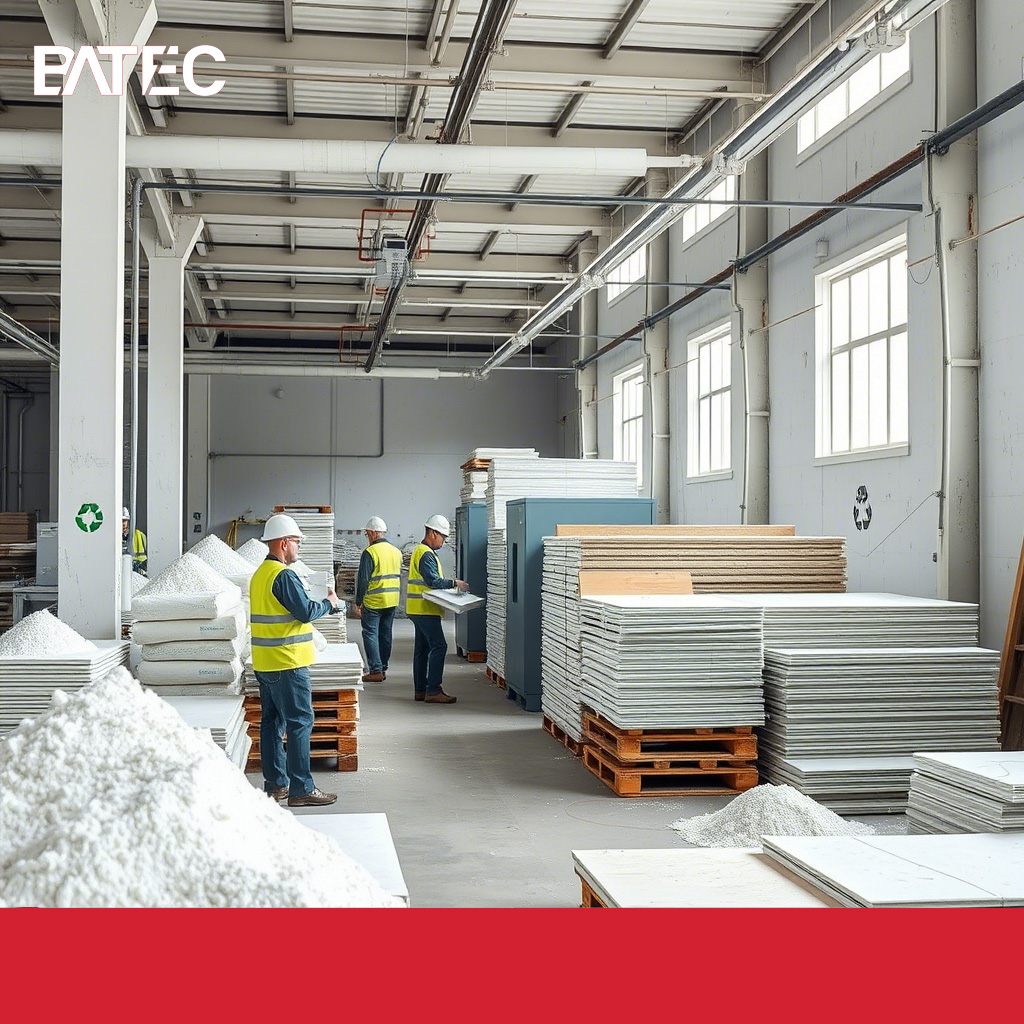
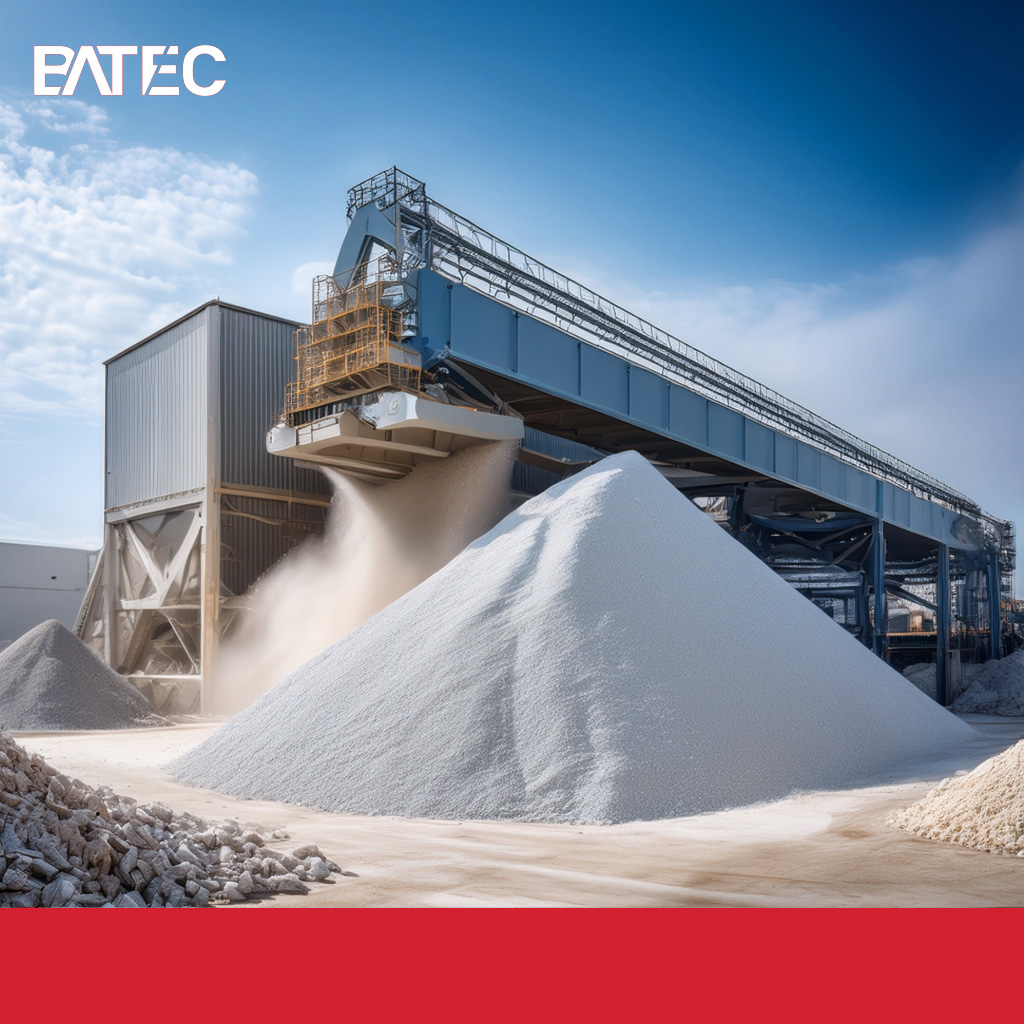
The lifecycle of gypsum products begins with extraction, where natural gypsum is mined using either open-pit or underground methods depending on the deposit depth and geological conditions. Once extracted, raw gypsum undergoes crushing, grinding, and calcination—where it is heated to remove chemically bound water and converted into hemihydrate form. This processed gypsum powder is then mixed with additives and water to form slurry, which is sandwiched between paper liners to create gypsum boards.
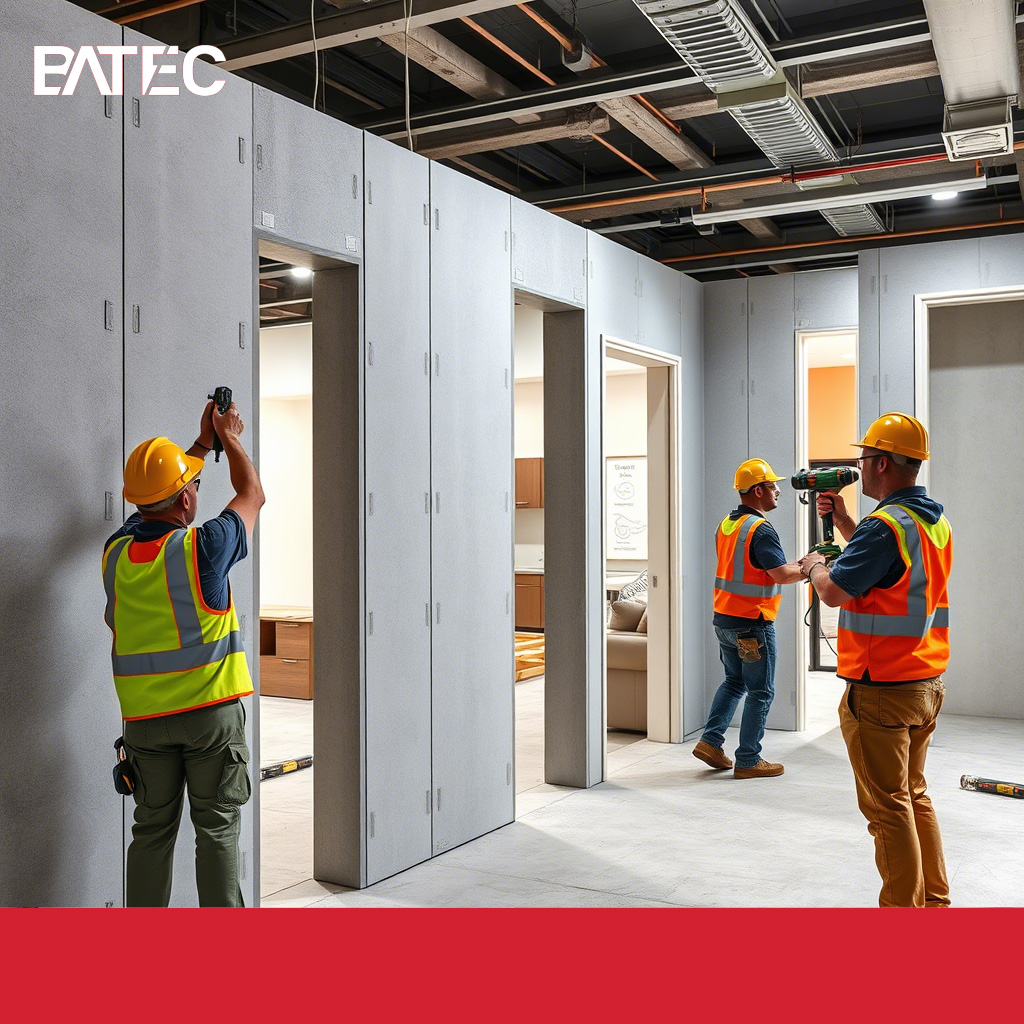
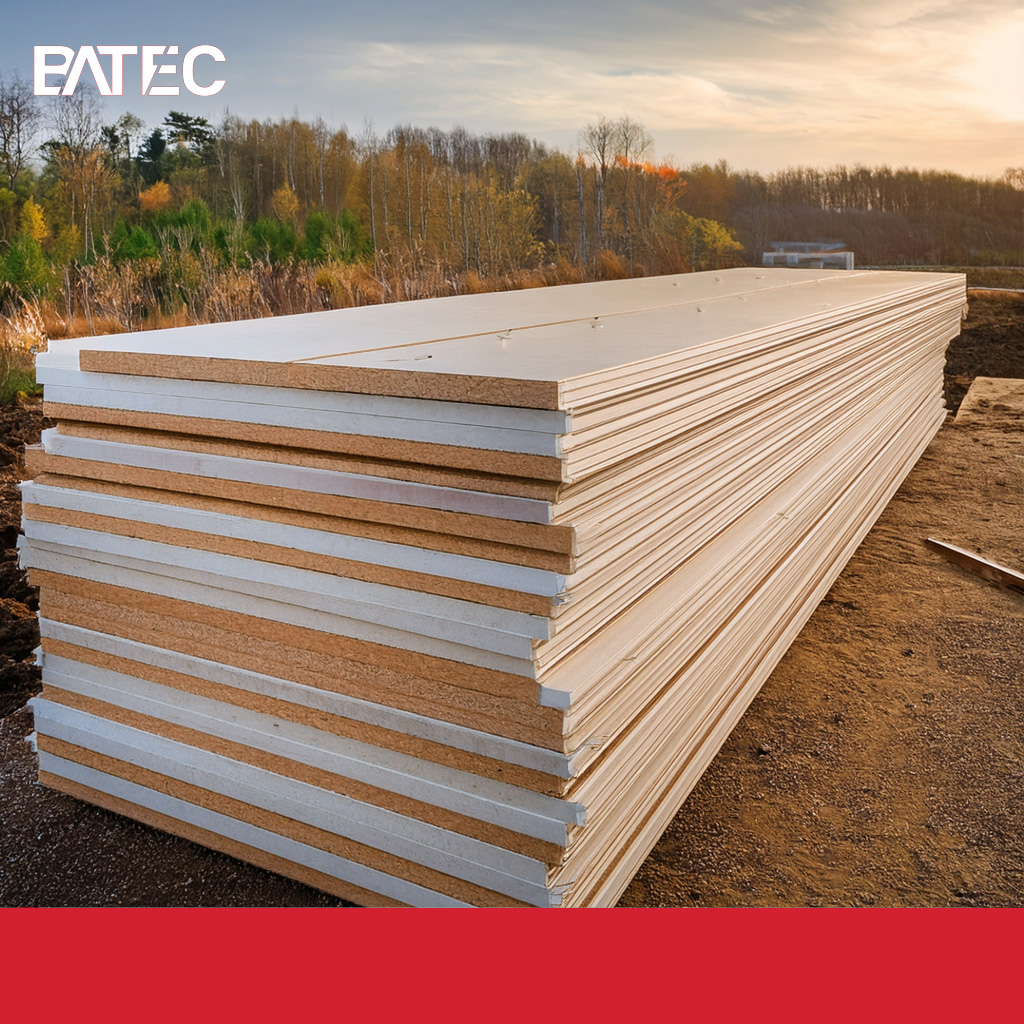
After manufacturing, gypsum boards are transported to construction sites where they are installed by professionals. During this phase, proper handling and storage are essential to prevent damage and ensure optimal performance. Installation typically involves cutting, fixing to metal or wooden studs, taping joints, and applying finishing compounds to create smooth surfaces ready for painting or decoration.
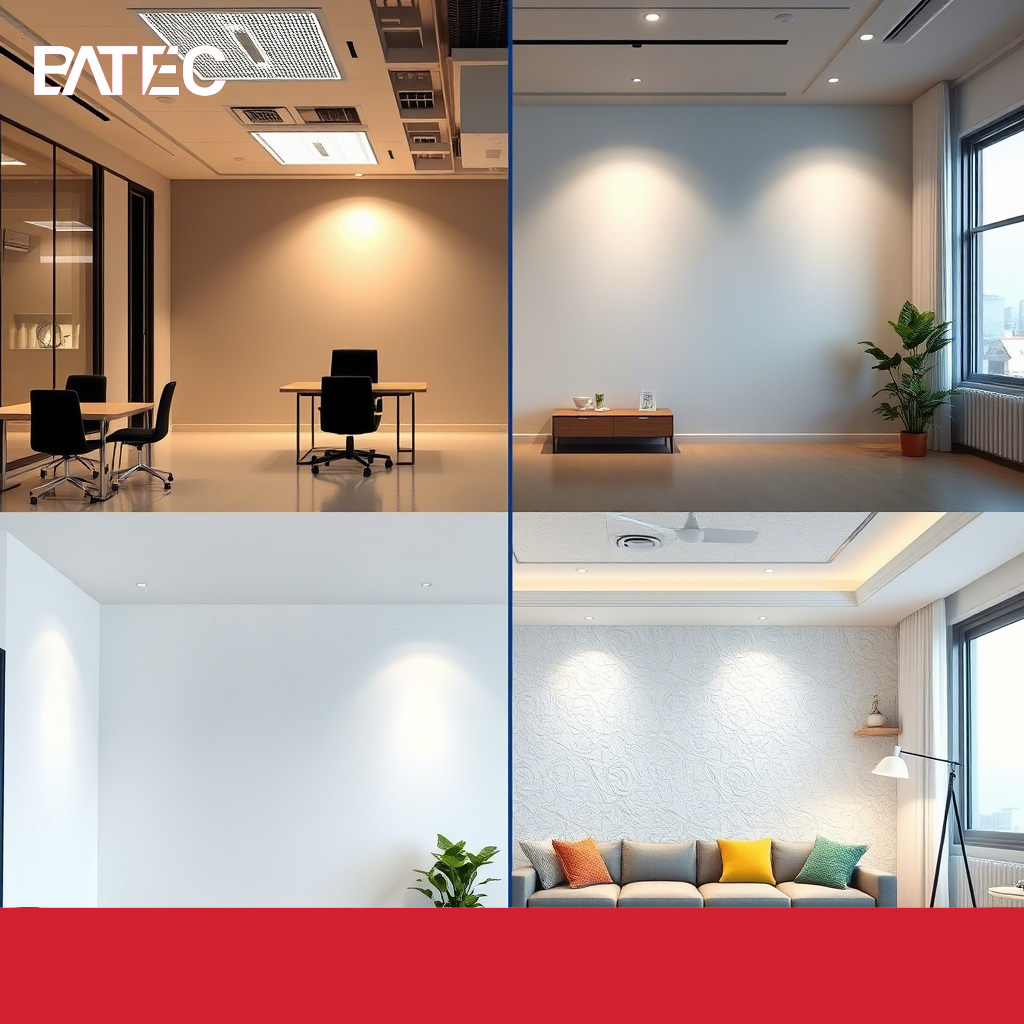
Once in use, gypsum products contribute to the functionality and aesthetics of interior spaces. Their fire-resistant and sound-absorbing qualities make them ideal for walls and ceilings in both residential and commercial settings. Additionally, their ability to regulate indoor humidity levels enhances occupant comfort and indoor air quality.
At the end of their useful life, gypsum products can be recycled through mechanical separation and processing, allowing the core gypsum to be reused in new boards or agricultural applications. Recycling initiatives are gaining traction globally, supported by regulations and industry-led programs aimed at minimizing waste and promoting circular economy principles in the construction sector.
Sustainability in Gypsum: Recycling, Waste Reduction & Green Certifications
Sustainability in gypsum production and usage encompasses environmental, economic, and social dimensions. From an environmental perspective, the industry focuses on reducing greenhouse gas emissions, minimizing resource depletion, and increasing recycling rates. Gypsum’s potential for reuse and its relatively low embodied energy compared to other construction materials position it favorably in sustainability metrics.
Lifecycle analysis (LCA) of gypsum products considers all stages—from extraction and manufacturing to transportation, installation, use, and disposal. According to the Athena Institute, the LCA of gypsum wallboard shows that the majority of its environmental impact occurs during the manufacturing phase, particularly due to energy consumption and emissions from calcination.
To mitigate these impacts, many manufacturers have adopted cleaner production techniques, including the use of renewable energy sources, improved kiln efficiency, and the integration of carbon capture technologies. Moreover, the shift toward using synthetic gypsum, especially from flue-gas desulfurization, reduces reliance on natural deposits and lowers overall emissions.
End-of-life management is another critical component of sustainability. While landfilling remains common, increasing emphasis is being placed on recycling infrastructure. In Europe, for instance, the European Gypsum Association reports that over 50% of gypsum waste is now being recycled. Governments and industry bodies are also developing policies and guidelines to encourage sustainable practices across the supply chain.
The Role of Gypsum Powder in Modern Plastering Techniques
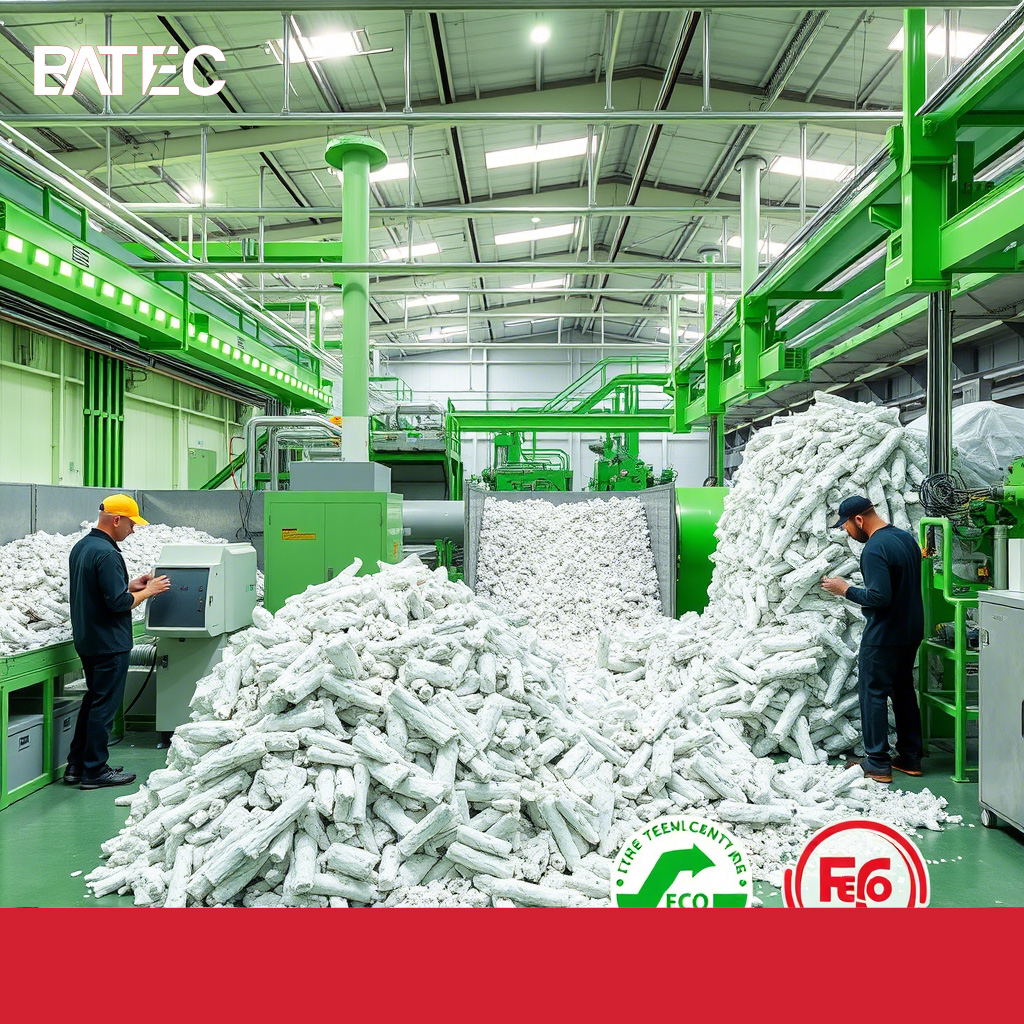
Recycling plays a central role in improving the sustainability of gypsum products. Traditional disposal methods often result in gypsum ending up in landfills, where it can react with organic matter under anaerobic conditions to produce hydrogen sulfide—a toxic and odorous gas. To address this issue, dedicated gypsum recycling facilities have emerged to process demolition waste and separate usable gypsum from contaminants like paper, paint, and adhesives.
Several countries have established successful gypsum recycling programs. For example, in the Netherlands, nearly 90% of construction and demolition gypsum waste is recycled, thanks to strong regulatory frameworks and industry collaboration. In North America, organizations like Gyp Eco in Canada and Greenboard Recycling in the U.S. offer solutions for collecting and repurposing post-consumer gypsum materials.
Green certifications such as LEED (Leadership in Energy and Environmental Design) and BREEAM (Building Research Establishment Environmental Assessment Method) recognize the use of recycled gypsum content and encourage sustainable sourcing practices. Projects that incorporate high percentages of recycled gypsum can earn credits toward certification, contributing to higher building sustainability ratings.
Beyond recycling, waste reduction strategies include optimizing material use during construction, adopting modular designs to minimize off-cuts, and promoting deconstruction rather than demolition. By embracing these approaches, stakeholders in the construction industry can significantly reduce environmental impact while supporting the transition to a more circular and responsible built environment.
Future Trends: Smart Gypsum Materials and Their Potential Applications
Gypsum powder has become the preferred choice for modern plastering due to its superior performance characteristics compared to traditional lime- or cement-based plasters. It offers faster setting times, smoother finishes, reduced shrinkage, and better workability, making it suitable for both manual and machine-applied applications. These advantages have led to its widespread adoption in residential and commercial construction projects.
Machine-applied gypsum plastering is gaining popularity due to its efficiency and consistency. Automated systems allow for large-scale application with minimal labor, reducing costs and project timelines. This method ensures uniform thickness and significantly minimizes common issues like cracking and delamination associated with hand-plastered surfaces.
From a performance standpoint, gypsum plaster provides enhanced thermal and acoustic insulation, contributing to occupant comfort and energy efficiency. It also exhibits excellent fire resistance, forming a protective layer of water vapor when exposed to heat, which delays structural weakening. These attributes make it ideal for use in high-rise buildings, hotels, hospitals, and educational institutions.
Moreover, the health and safety benefits of gypsum plaster cannot be overlooked. Unlike cement plaster, it does not require extended curing periods. While any dry powder application involves dust, gypsum plaster generally contributes to improved working conditions due to its non-caustic nature compared to cement and accelerates the readiness of surfaces for painting or decoration, streamlining the overall construction process.
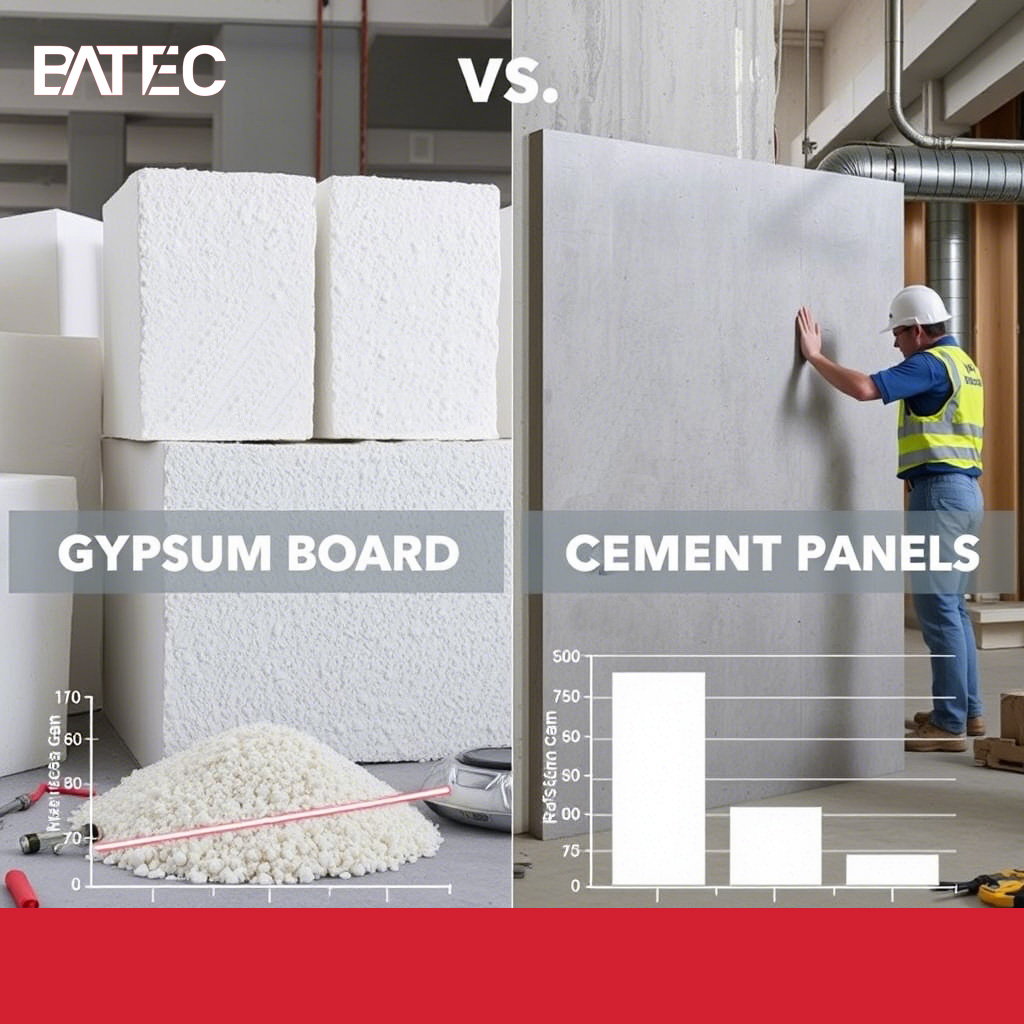
Gypsum vs. Cementitious Materials: A Comparative Study
When selecting materials for internal wall and ceiling finishes, builders often compare gypsum-based products with cementitious alternatives such as sand-cement plasters and screeds. Each material has distinct advantages and limitations, and the choice depends on factors like cost, performance requirements, application speed, and environmental considerations.
Gypsum-based materials generally offer faster application and drying times, reducing project duration. They provide a smoother finish out-of-the-box, requiring minimal sanding before painting. In contrast, cementitious materials are harder and more abrasion-resistant, making them suitable for external or high-traffic areas. However, they tend to crack more easily due to shrinkage and require additional finishing coats.
Thermally, gypsum performs better than cement, offering greater insulation and contributing to energy savings. Acoustically, gypsum also absorbs sound more effectively, making it preferable in noise-sensitive environments. On the other hand, cementitious materials exhibit higher compressive strength and moisture resistance, though they are heavier and may place additional load on building structures.
From an environmental perspective, gypsum has a lower embodied energy and is more readily recyclable. Cement, being a major contributor to global CO₂ emissions, is under increasing scrutiny. However, advancements in eco-friendly cement blends and hybrid gypsum-cement composites are emerging as compromise solutions that balance performance and sustainability.
Feature | Gypsum-Based Materials | Cementitious Materials |
Chemical Composition | Calcium Sulfate Hemihydrate (CaSO₄ · ½ H₂O) | Cement (clinker + additives), Sand, Water |
Setting Mechanism | Rehydration (chemical reaction with water) | Hydration (chemical reaction with water) |
Setting Time | Very fast (minutes to hours) | Slower (hours to days) |
Drying Time | Rapid; less reliant on air drying after set | Slower; requires prolonged curing/drying |
Finish Quality | Naturally smooth, fine finish; minimal sanding | Rougher often requires skim coat/putty for a smooth finish |
Workability | Very good; easy to spread/trowel; machine-apply readily | Good, but stiffer; often requires more effort to achieve a smooth finish |
Shrinkage & Cracking | Low drying shrinkage: less prone to cracks. | Prone to drying shrinkage cracks if not properly mixed/cured; also from thermal stress/movement |
Hardness/Abrasion | Softer, less abrasion-resistant | Harder, highly abrasion-resistant |
Moisture Resistance | Low (standard); moisture-resistant variants available, but not for direct water exposure | High; suitable for wet environments and direct water contact |
Fire Resistance | Excellent (releases chemically bound water vapor, cooling structure) | Good (non-combustible) |
Thermal Insulation | Good insulator (lower thermal conductivity) | Moderate insulator (higher thermal conductivity) |
Acoustic Performance | Good sound absorption/insulation | Moderate sound insulation |
Weight | Lighter (especially lightweight boards) | Heavier |
Embodied Energy | Generally lower | Higher (cement production is energy-intensive) |
CO₂ Emissions | Lower from manufacturing | Higher (significant CO₂ from clinker production) |
Recyclability | Highly recyclable (can be re-calcined or reused in agriculture) | Limited recycling for mixed demolition waste; some concrete recycling is possible |
pH Level | Neutral (7–8) | Alkaline (12–13) |
Curing Required | No extended wet curing | Requires wet curing to prevent cracking and ensure strength |
Cost | Generally comparable or slightly higher for specialized gypsum boards | Varies widely, but basic sand-cement plaster can be cheaper initially |
The Rise of Smart Drywall: Integrating Technology into Interior Walls
Smart drywall represents a major innovation in construction technology, seamlessly blending traditional building materials with embedded electronics to enhance functionality. These advanced walls can integrate sophisticated sensors for real-time monitoring of temperature, humidity, and occupancy, enabling automated control of HVAC (heating, ventilation, and air conditioning) and lighting systems for optimal comfort and energy efficiency.
Beyond basic sensing, some cutting-edge smart drywall solutions even include integrated heating elements for radiant warmth or active acoustic panels that significantly reduce noise transmission. These features contribute to superior comfort and efficiency in both residential and commercial buildings.
Key Advancements in Smart Drywall
One notable advancement is the integration of phase-change materials (PCMs) directly into drywall cores. These PCMs allow for passive thermal energy storage and regulation. By absorbing and releasing heat as they change phase (e.g., from solid to liquid), PCMs help to stabilize indoor temperatures, thereby reducing reliance on mechanical heating and cooling systems. Leading companies like Saint-Gobain and Knauf have introduced prototypes that combine advanced insulation with PCM technologies, addressing the growing demand for highly energy-efficient construction.
Smart Integration for Modern Spaces
In smart homes and offices, drywall with built-in wiring channels simplifies the installation of smart switches, audio speakers, and ambient lighting systems without compromising the aesthetic integrity of the interior. This eliminates the need for visible conduits or extensive retrofitting.
Furthermore, in sensitive environments such as healthcare facilities and hospitality venues, touchless interfaces embedded directly into drywall allow for hygienic control of room settings. This innovation aligns perfectly with post-pandemic design standards that prioritize health and safety.
As a provider of high-quality gypsum board solutions that form the foundation for such intelligent systems, Batec Group produces specialized boards like their Fire-Resistant and Moisture-Resistant options (BATEC Gboard FR, BATEC Gesso MR H2). These boards, meeting international standards, are crucial base materials for constructing environments ready for smart technology integration.
As the Internet of Things (IoT) becomes increasingly prevalent in architecture, smart drywall is poised for further evolution. Future iterations will likely incorporate AI-driven environmental controls and interactive surfaces, transforming walls from passive building materials into active, intelligent components of responsive living and working environments.
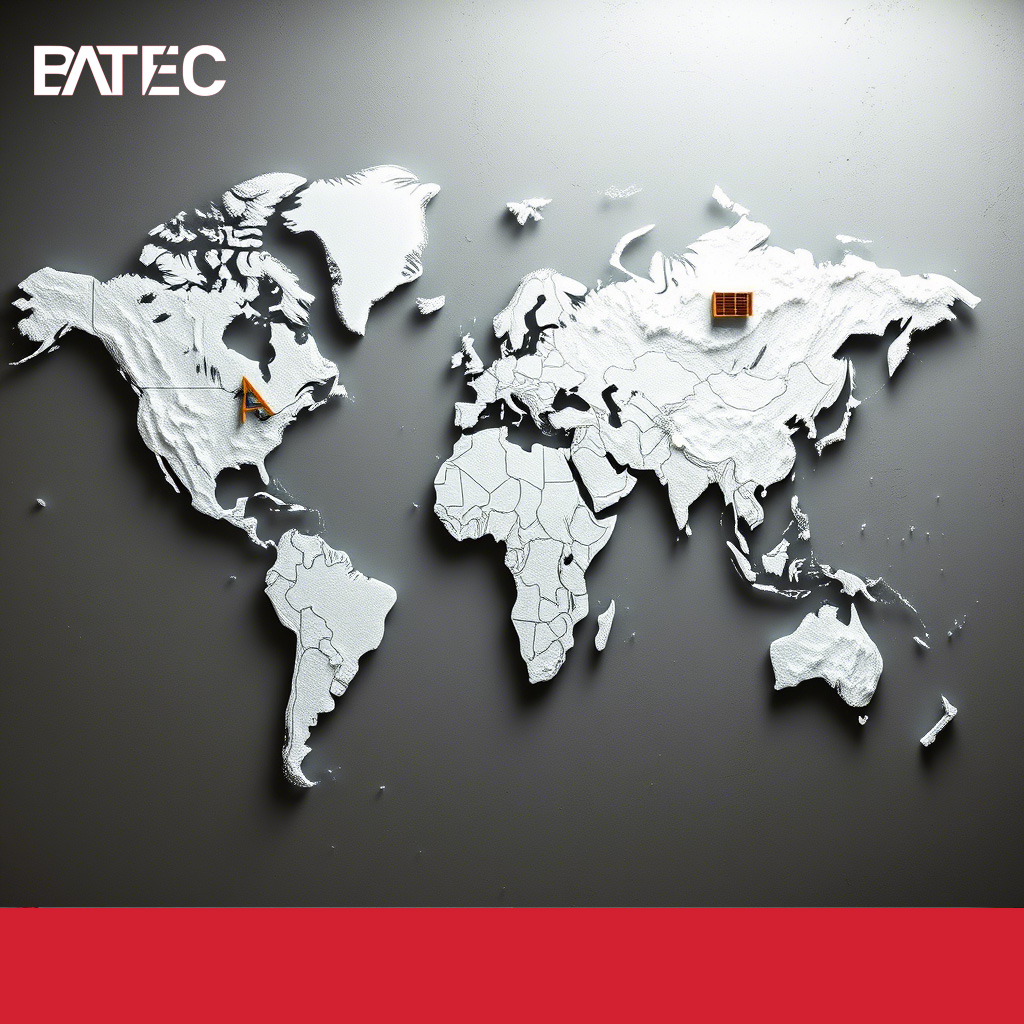
Global Shifts in Drywall Usage: What’s Trending Across Continents
Drywall usage patterns vary significantly across different regions of the world, influenced by factors such as climate, prevailing regulatory standards, and established construction practices. Understanding these global shifts provides insight into the material’s evolving role in the built environment.
North America: Dominance and Specialization
In North America, drywall remains the dominant interior wall material. Its widespread adoption is primarily driven by its compatibility with traditional wood-framed structures and its cost-effective installation. A noticeable trend in this region is the growing preference for specialized moisture- and mold-resistant boards, particularly in humid climates like Florida and Texas, where these properties are crucial for building longevity and occupant health.
Europe: Performance and Sustainability Leadership
Europe has witnessed increased adoption of high-performance drywall solutions, with a strong emphasis on fire-rated and acoustic boards. This is especially true in multi-family housing projects and large-scale public infrastructure. Countries like Germany and Sweden are at the forefront of sustainability efforts, actively promoting the use of recycled gypsum content and low-VOC (volatile organic compound) finishes. The European Gypsum Association notably reports that over 50% of gypsum waste in Europe is now being recycled, significantly contributing to circular economy goals.
Middle East & GCC: Rapid Modernization
In the Middle East and Gulf Cooperation Council (GCC) countries, drywall is rapidly gaining traction as part of extensive urbanization and modernization efforts across the region. Batec Group, established in 2018, has emerged as a key player, becoming Syria’s first gypsum board manufacturer and now strategically expanding its reach into Iraq and Libya. The UAE and Saudi Arabia are increasingly adopting international standards for fire safety and indoor air quality, influencing the widespread specification of high-performance drywall products. High-rise residential towers and luxury hotels increasingly use lightweight drywall systems to speed up construction timelines. Batec’s commitment to “Global Standards, Regional Delivery” is a core tenet, meaning their gypsum boards and powders are developed in line with European (EN 520) and American (ASTM C1396) quality benchmarks but are produced regionally. This approach effectively reduces lead times, cuts logistical complexities, and supports local economies, which is crucial for the rapid and robust development across the Middle East.
Asia: Growth and Green Initiatives
Meanwhile, in Asia, particularly in fast-developing economies like China and India, drywall adoption is steadily rising, though it still lags behind traditional plastering methods in many areas. Government initiatives aimed at promoting green building certifications, such as LEED and GRIHA, are actively encouraging the use of eco-friendly drywall alternatives. As modular construction gains popularity across the continent, drywall is expected to become an increasingly standard component in prefabricated building systems, further boosting its market penetration.
From Plain to Premium: The Evolution of Drywall Finishes and Textures
Drywall finishes have evolved considerably, moving far beyond simple paint-ready surfaces. Today, they offer a diverse range of textures, patterns, and decorative effects that significantly enhance interior aesthetics and meet specific design visions.
Classic and Innovative Textures
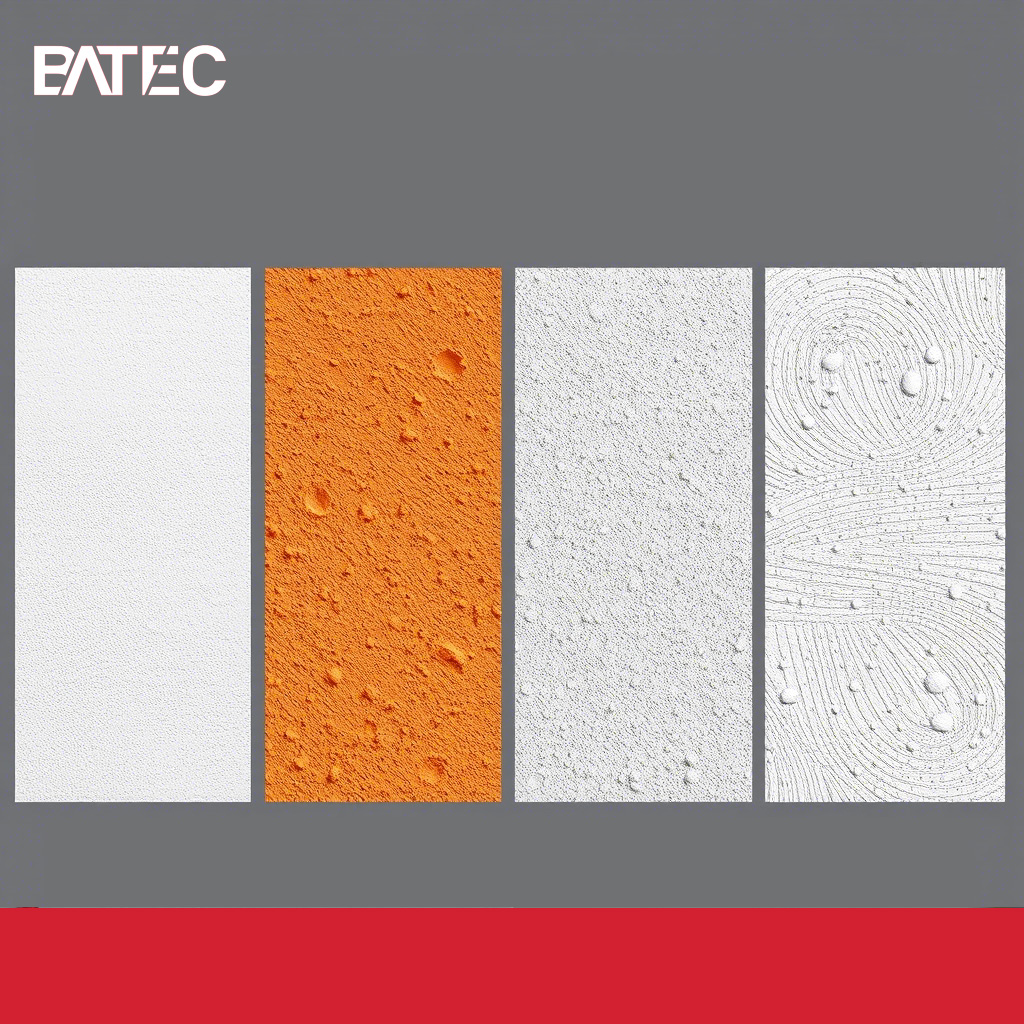
Textured drywall remains popular for its ability to conceal minor imperfections while adding visual interest. Common textures include:
- Knockdown: A subtle, stucco-like finish.
- Orange Peel: Resembling the skin of an orange, offering a soft, bumpy look.
- Skip Trowel: A hand-applied technique that creates a distinctive, rustic pattern.
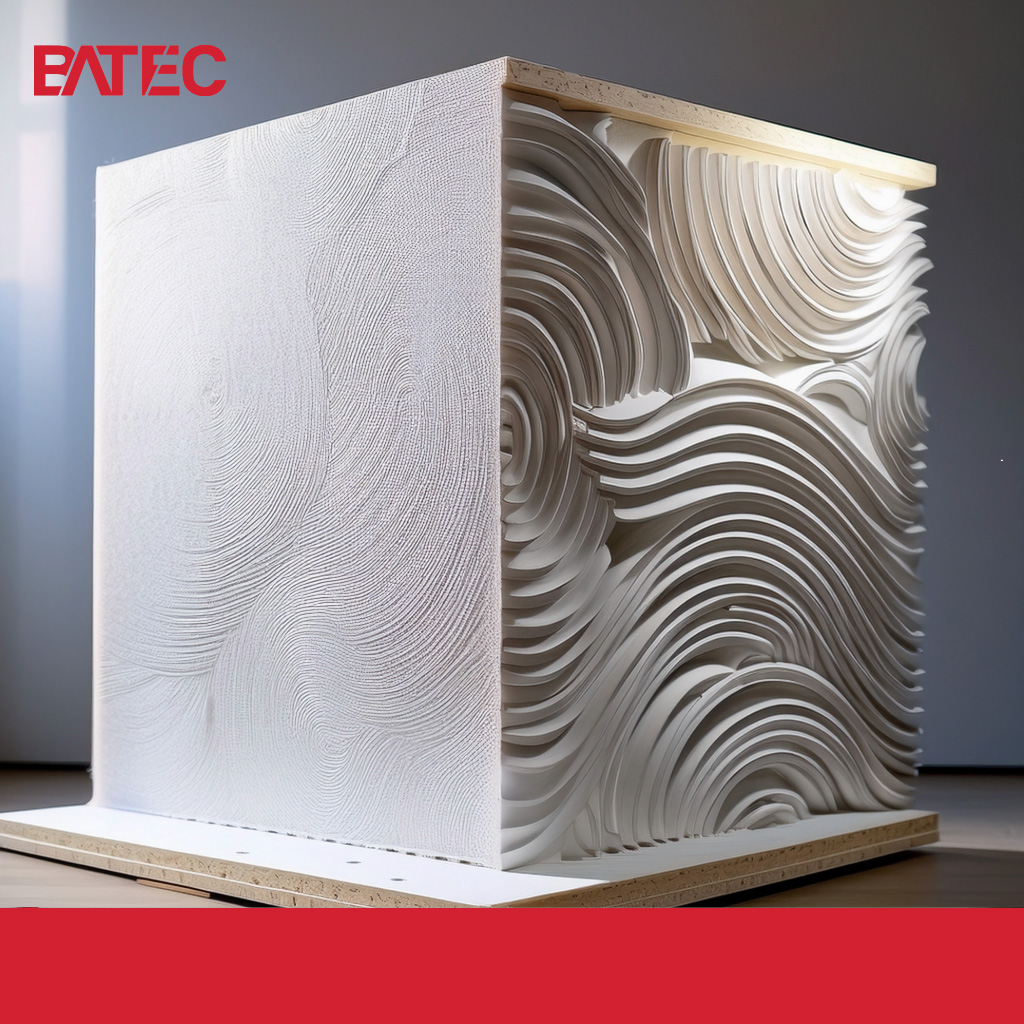
Beyond traditional textures, manufacturers are introducing innovative pre-finished panels with embossed designs that convincingly mimic natural materials like stone, brick, or wood grain. These panels reduce the need for additional cladding materials, streamlining the finishing process.
Architectural and Performance Finishes
Architectural drywall panels featuring intricate 3D reliefs and enhanced acoustic properties are becoming common in high-end residential and commercial interiors. These panels serve dual purposes:
Functional: Providing effective sound absorption and insulation.
Aesthetic: Acting as sophisticated statement pieces in living rooms, home theaters, office meeting spaces, and lobbies.
Leading brands such as USG and CertainTeed offer extensive customizable options that cater to both specific aesthetic preferences and demanding performance requirements.
Another emerging trend is the use of colored and coated drywall that often eliminates the need for painting altogether. Pre-painted or laminated drywall is available in a wide variety of hues, as well as metallic and specialized finishes, making it ideal for minimalist or industrial-style interiors. Additionally, specialized coatings like fire-rated and anti-microbial finishes are gaining popularity in healthcare, education, and hospitality sectors, where durability, safety, and hygiene are paramount.
For interior spaces demanding both function and aesthetics, Batec Group offers BATEC Decorative Boards. These boards provide a smooth surface finish for easy decoration, making them highly adaptable for painting, texturing, or application of various decorative coatings. Their precision-engineered gypsum core ensures dimensional accuracy and reliable performance, contributing to premium interior finishes.
Digital Printing and Personalized Interiors
With remarkable advancements in digital printing technology, some companies are now experimenting with applying full-color imagery and complex graphics directly onto drywall surfaces. This opens up unprecedented creative possibilities for:
- Feature walls in residential homes.
- Dynamic retail environments.
- Engaging educational spaces.
As the demand for personalized and unique interiors continues to grow, drywall manufacturers are increasingly positioning themselves not merely as suppliers of structural materials, but as collaborative partners in design innovation, helping to shape the very character of interior architecture.
New Tools and Techniques: Revolutionizing Drywall Installation Efficiency
The drywall installation process, traditionally labor-intensive, has undergone significant technological improvements aimed at dramatically increasing speed, precision, and worker safety. These innovations are transforming how interior walls are built.
Automation in Finishing
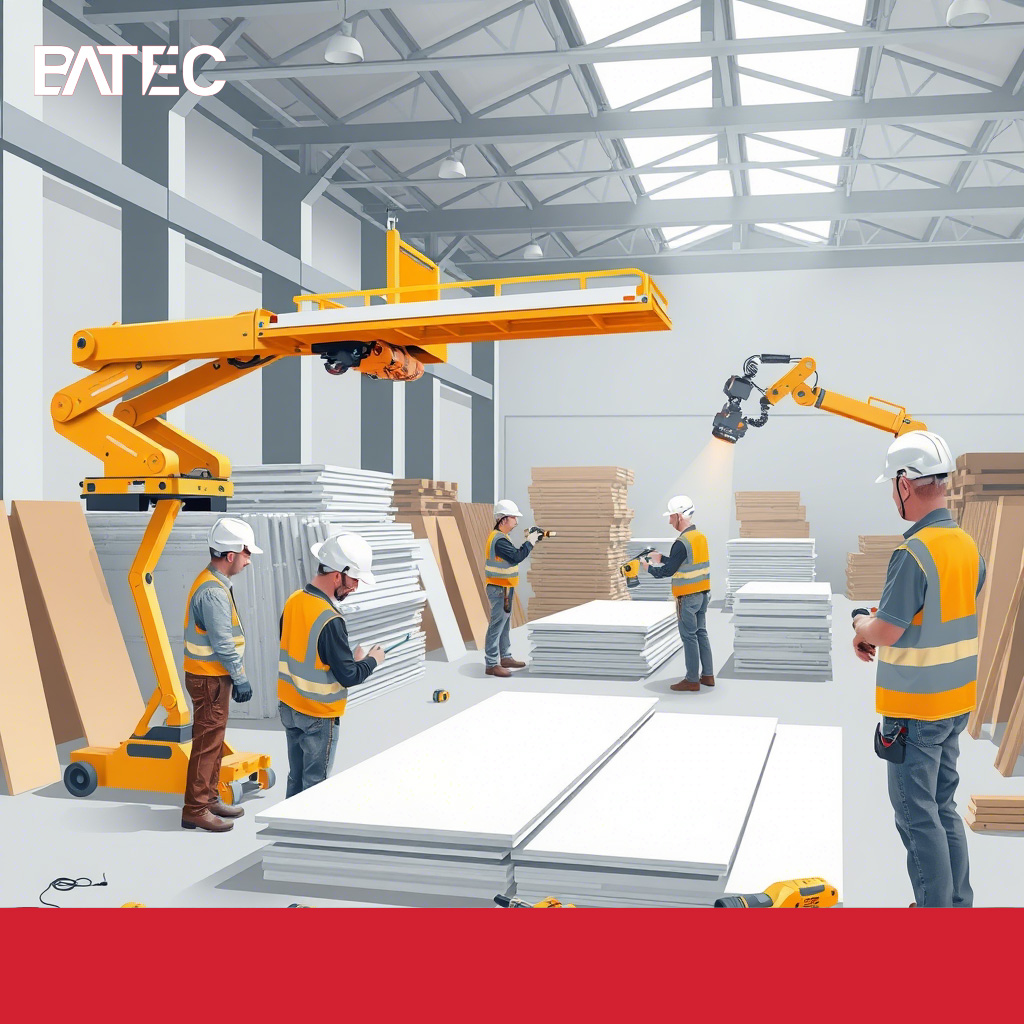
One of the most impactful advancements is the widespread adoption of automated drywall finishing machines. These machines apply joint compound uniformly and efficiently, drastically reducing the labor-intensive and time-consuming task of sanding. Tools like the RotoPro Max and various Sheetrock® Brand Automatic Tapers streamline the mudding and taping processes, potentially cutting down project timelines by as much as 40%. This not only accelerates completion but also ensures a more consistent and high-quality finish.
Precision with Lasers
Laser-guided tools have revolutionized layout and alignment processes on construction sites. Laser levels and distance meters ensure pinpoint accurate stud placement and precise drywall hanging, minimizing errors from the outset. This improved first-time accuracy is critical, as it significantly reduces the need for rework and minimizes material waste—both key considerations in sustainable construction practices.
Enhanced Productivity and Safety Tools
Power tools specifically designed for drywall work further enhance productivity while simultaneously protecting workers’ health:
Dustless sanders capture up to 95% of airborne particles, drastically improving indoor air quality during renovations and new builds. This is a major benefit for worker respiratory health.
Electric screw guns with depth control ensure screws are driven to the perfect depth every time, preventing damage to the drywall surface and speeding up installation.
Digital Planning and Collaboration
Beyond physical tools, mobile apps and digital planning platforms are empowering contractors to visualize installations with unprecedented detail before execution. Platforms like Builder Trend and PlanGrid enable real-time collaboration among architects, engineers, and installers. This ensures that drywall layouts align perfectly with complex electrical, plumbing, and HVAC plans, preventing costly conflicts and delays. As Building Information Modeling (BIM) becomes increasingly integrated into construction workflows, drywall installation is becoming smarter, faster, and remarkably more precise.
Modular and Prefabricated Drywall Systems: Building Faster Without Compromise
Modular construction is fundamentally reshaping the way drywall is utilized in modern building projects, offering a path to faster, more consistent, and often more sustainable construction.
The Power of Off-Site Manufacturing
Prefabricated drywall panels are manufactured off-site in controlled factory environments. This method offers several distinct advantages:
- Reduced On-Site Labor: Less work needed on the construction site.
- Minimized Weather Delays: Production is unaffected by adverse weather conditions.
- Improved Quality Control: Manufacturing in a controlled setting leads to higher and more consistent build quality.
- Once manufactured, these panels are transported to the construction site and installed rapidly, significantly accelerating project timelines.
Integrated Customization and Efficiency
Prefabrication allows for an unprecedented level of customization and integration. Panels can arrive at the job site pre-equipped with:
- Electrical conduits
- Insulation
- Even pre-applied finishes
This level of integration is particularly beneficial in large-scale developments such as hotels, hospitals, and student housing, where consistency, precision, and efficiency are paramount for successful project delivery.
Pioneering Examples and Global Adoption
In the U.S., companies like Katerra (though now defunct, its influence on modular methods remains) and DIRTT (Doing It Right This Time) have been pioneers in implementing modular drywall systems, particularly in commercial interiors. These systems often feature interlocking panels that require minimal field adjustments, further accelerating project timelines. In Europe, modular drywall is increasingly being utilized in the retrofitting of older buildings, helping them efficiently meet modern energy codes and accessibility standards without extensive on-site disruption.
Sustainability and the Circular Economy
As sustainability gains increasing priority in construction, modular drywall systems also support key circular economy principles. Panels can be designed for easy disassembly and potential reuse. With proper labeling and tracking throughout their lifecycle, it becomes significantly easier to recover and repurpose these materials in future projects. Faced with growing pressure to reduce carbon footprints and construction waste, modular drywall systems are proving to be a scalable and effective solution for the future of building.
Drywall as Design Statement: Curved Walls, Hidden Doors, and Feature Panels
Modern interior design is pushing the boundaries of what drywall can achieve, transforming it from a mere flat partition into a versatile canvas for creative expression and sophisticated architectural elements.
Sculptural Forms: Curved Walls
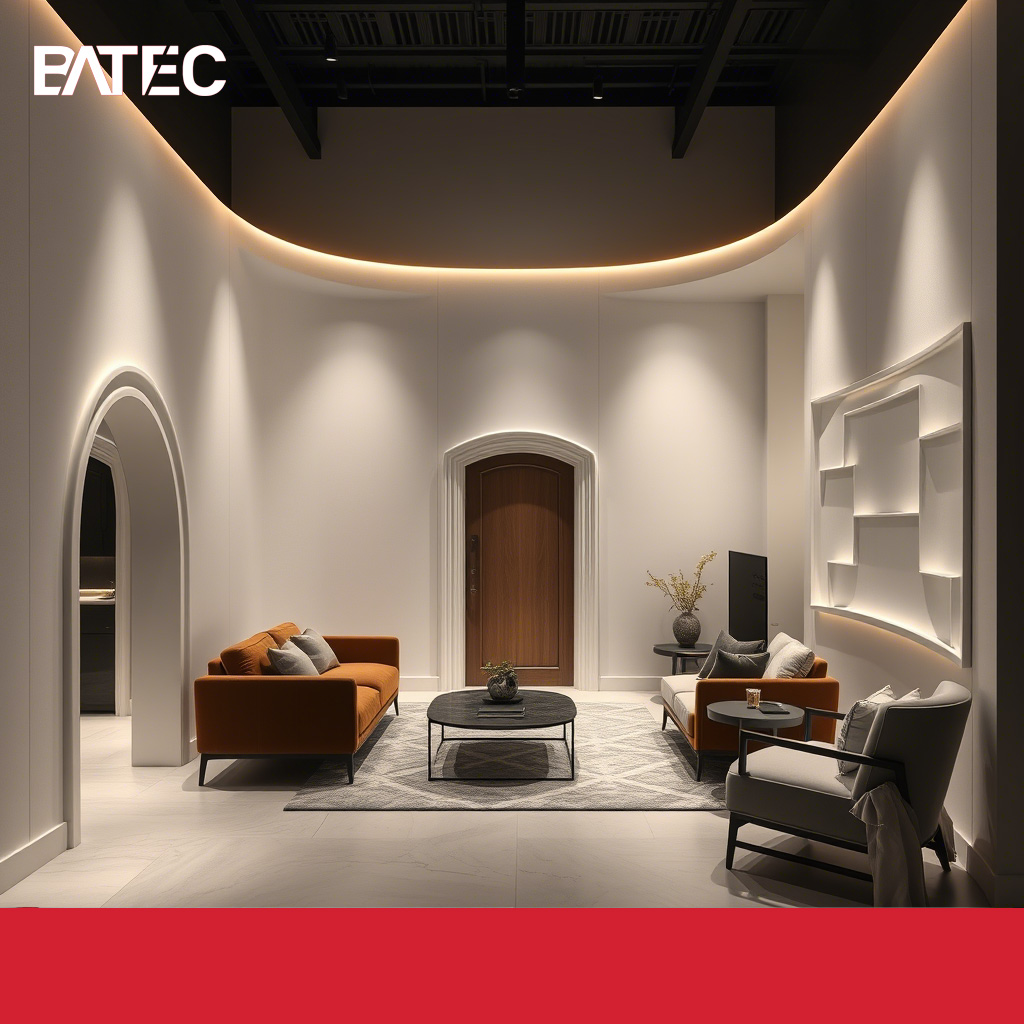
Curved drywall walls are becoming a signature element in contemporary homes and commercial spaces. They offer soft, sculptural forms that provide a striking contrast to rigid architectural lines. By utilizing flexible drywall sheets and specialized framing techniques, designers can now seamlessly create graceful arches, elegant domes, and flowing contours that add drama, movement, and a sense of luxury to any interior.
Seamless Integration: Hidden Doors
Hidden doors integrated into drywall surfaces represent another rising trend, especially prevalent in luxury homes and boutique hotels. These concealed entries are designed to blend seamlessly with the surrounding walls through the meticulous use of matching paint, continuous paneling, or perfectly aligned wallpaper. This creates an illusion of continuity and an element of surprise. Often used to discreetly hide pantries, closets, or even secret rooms, these features enhance both aesthetics and functionality.
Artistic Expressions: Feature Panels
Feature panels made from textured or patterned drywall are also gaining significant popularity. These panels can be thoughtfully designed to incorporate:
- Backlighting for dramatic effect.
- Recessed niches for displaying art or objects.
- Custom cutouts to highlight artwork, flat-screen TVs, or other architectural details.
In commercial settings, such as restaurants, retail spaces, and co-working environments, these visually striking features help to define distinct zones, enhance brand identity, and create a unique ambiance. Batec Group’s BATEC Decorative Boards, designed for both function and aesthetics, offer a smooth finish and are easily adaptable for painting, texturing, or other decorative coatings, making them suitable for these creative design applications that transform walls into statement pieces.
Mixed-Media Applications
Designers are increasingly experimenting with mixed-media applications, combining drywall with complementary materials like wood, metal, or fabric inserts to create dynamic and multi-dimensional wall compositions. Whether employed for their acoustic properties, purely decorative purposes, or for clever spatial division, drywall is undeniably evolving into a versatile and sophisticated material for creative expression in interior architecture.
Sustainable Drywall Practices: Eco-Friendly Materials, Recycling, and Reuse
Sustainability is no longer an optional consideration in construction; it has become a fundamental necessity. In response, drywall manufacturers are actively developing and promoting eco-friendly products that significantly reduce environmental impact throughout the material’s entire lifecycle.
Eco-Friendly Materials and Formulations
A key focus is on producing recycled-content drywall, which is now widely available. Made from post-consumer or post-industrial gypsum, these boards perform as effectively as conventional drywall while conserving virgin resources.
To further improve indoor environmental quality, the industry is increasingly adopting low-VOC (volatile organic compound) joint compounds and adhesives. Many brands now also offer formaldehyde-free core formulations and paper facings made from renewable resources. These advancements cater directly to the requirements of green building certifications like LEED (Leadership in Energy and Environmental Design) and WELL, which prioritize healthy and sustainable indoor environments. Batec Group, for example, emphasizes the use of environmentally friendly and recyclable materials in their product formulations, aligning with these crucial global sustainability trends and ensuring compliance with relevant standards.
Expanding Recycling Programs
Recycling programs for construction and demolition (C&D) gypsum waste are expanding globally. This is crucial because traditional landfilling of gypsum can lead to the production of toxic and odorous hydrogen sulfide gas when gypsum reacts with organic matter under anaerobic conditions.
In the European Union, strict landfill regulations have been a driving force behind widespread gypsum recycling, leading to impressive rates.
In the U.S., organizations like Gyp Eco (part of New West Gypsum Recycling) and Greenboard Recycling are establishing extensive collection networks to divert vast quantities of drywall from landfills.
These dedicated facilities efficiently separate clean gypsum from common contaminants (like paper, paint, and adhesives) and reprocess it. The recovered gypsum can then be used in the production of new drywall boards or as an agricultural soil amendment.
Promoting Reuse
Reusing whole drywall panels is also gaining traction, particularly in renovation and deconstruction projects. Salvaged drywall, if in good condition, can be repurposed for non-critical areas like garage walls or temporary structures, effectively extending the material’s useful life cycle.
By embracing these comprehensive approaches—from eco-friendly material formulations and robust recycling infrastructure to the promotion of direct reuse—stakeholders in the construction industry are significantly reducing their environmental footprint. This collective effort actively supports the transition to a more circular and responsible built environment, where waste is minimized and resources are conserved.
Drywall in Commercial vs. Residential Spaces: Adapting Trends to Purpose
While drywall is used extensively in both residential and commercial construction, its specific application, performance requirements, and design considerations differ significantly based on the building’s function, durability needs, and regulatory mandates.
Residential Applications
In residential settings, drywall is primarily chosen for its:
Ease of Installation: Making it accessible for both professionals and DIY enthusiasts.
Cost-Effectiveness: Providing an affordable solution for interior finishes.
Adaptability: Easily accommodating future modifications or aesthetic changes.
Homeowners typically prioritize lightweight, easy-to-paint boards. There’s also a growing interest in specialized soundproofing boards for enhanced acoustic comfort and moisture-resistant variants for high-humidity areas like bathrooms, kitchens, and basements.
Commercial Applications
In commercial environments—such as office buildings, schools, and hospitals—drywall must adhere to much stricter performance and regulatory standards:
Fire Safety: Fire-rated boards are commonly specified for corridors, stairwells, and shared spaces to comply with stringent building codes and ensure occupant safety. Batec Group’s BATEC Fire-Resistant Boards (BATEC Gboard FR) are engineered specifically for high-risk environments, offering extended structural integrity and flame spread control crucial for commercial fire safety compliance.
Acoustic Performance: Acoustic drywall is frequently used in conference rooms, classrooms, and learning centers to minimize noise transmission and create more productive or healing environments.
Durability and Hygiene: Antimicrobial and washable finishes are preferred in healthcare and food service facilities, where surfaces must withstand frequent cleaning and maintain high hygiene standards. Batec’s Moisture-Resistant Boards (BATEC Gesso MR H2), designed for damp-prone environments, also contribute to hygiene by helping to prevent mold and mildew growth in areas like commercial kitchens and bathrooms.
Retail and hospitality sectors leverage drywall’s versatility to create unique and branded environments. Custom shapes, intricate textures, and integrated lighting are expertly used to craft immersive experiences that define a brand’s identity and appeal to customers. In modern co-working spaces, the flexibility of movable drywall partitions allows for dynamic layouts that can be easily reconfigured to adapt to changing tenant needs or collaboration styles.
Despite these distinct application profiles, cross-sector trends like sustainability, modularity, and smart integration are increasingly blurring the lines between residential and commercial applications. As drywall technology continues to evolve, it remains a foundational and highly adaptable material, capable of meeting the diverse architectural and functional demands of nearly any building type.
Getting Started: How to Install Gypsum Boards Like a Pro
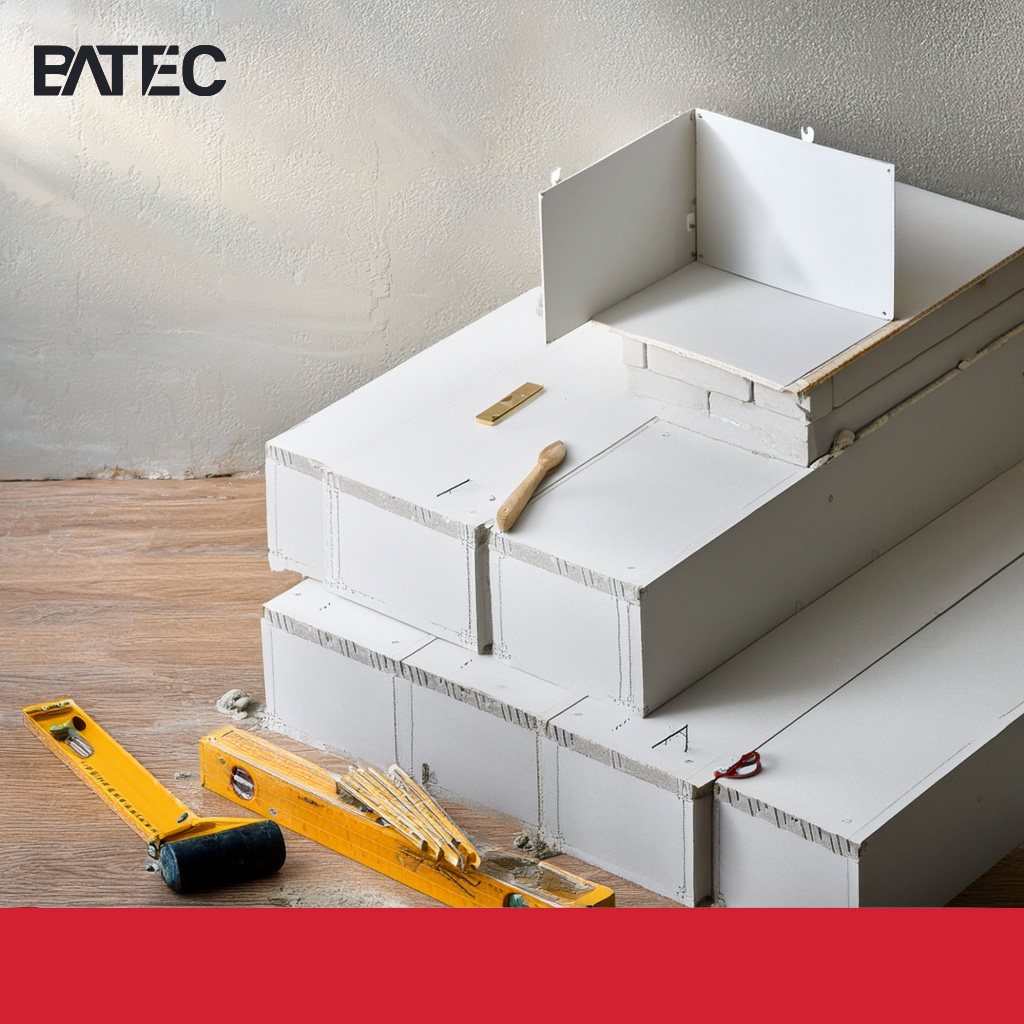
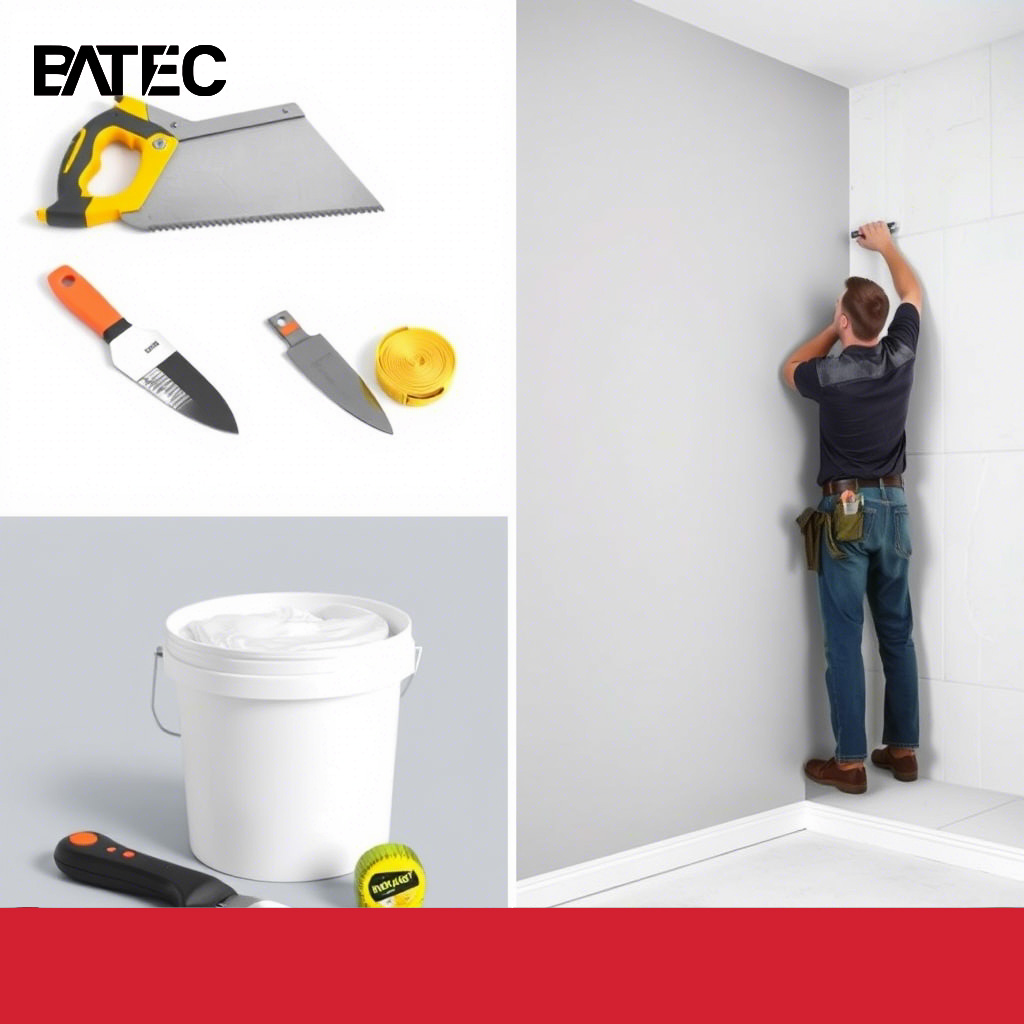
Installing gypsum boards correctly begins with a solid understanding of the materials and tools involved. Batec Group offers high-quality gypsum boards that are ideal for both residential and commercial applications, renowned for their fire resistance, ease of installation, and acoustic properties. For beginners, it’s essential to gather the right tools—such as a screw gun, utility knife, taping knife, and drywall lift—and ensure accurate measurements before cutting and fixing.
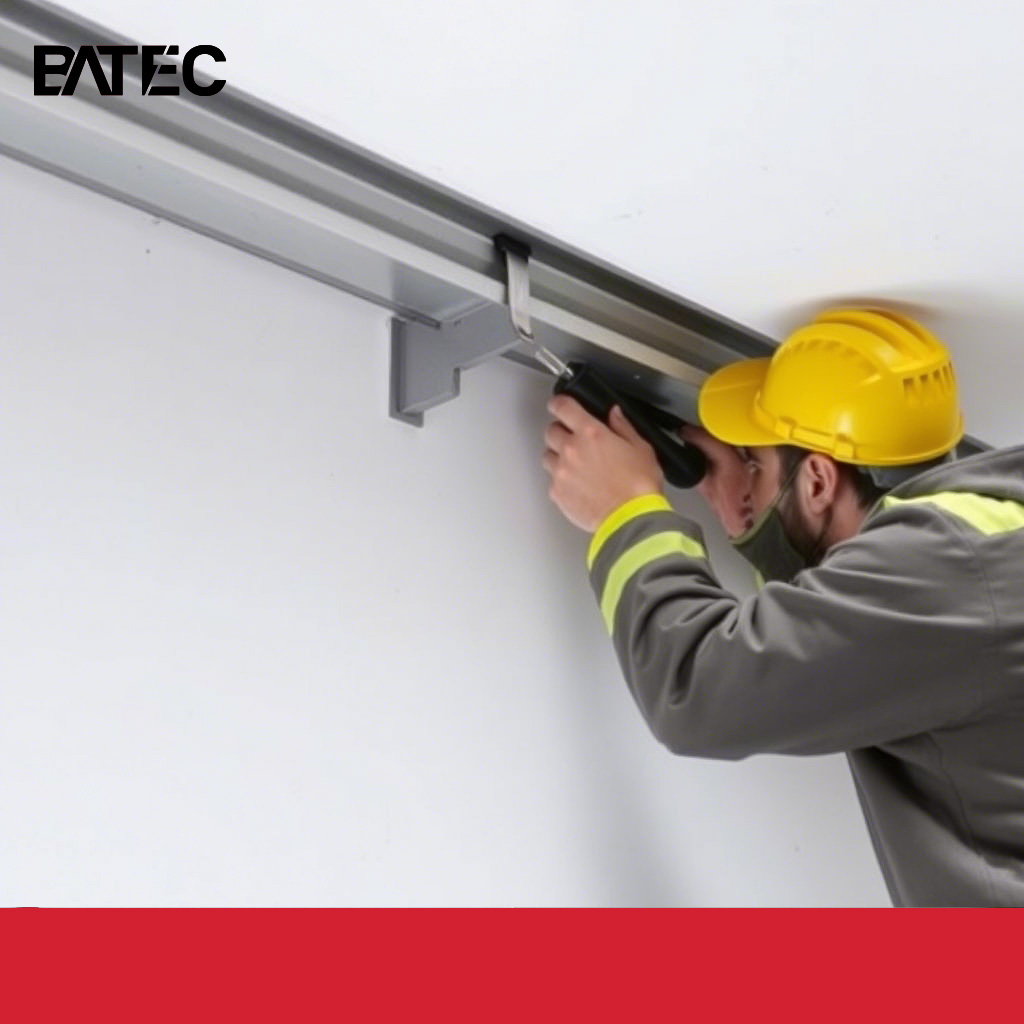
Start by framing your wall or ceiling using metal or wooden studs spaced at standard intervals (typically 40–60 cm apart). Then, lift the board into place and secure it with drywall screws. When installing Batec gypsum boards, make sure they are tightly butted together without forcing them, which can cause cracks later on. Always leave a slight gap between the floor and the bottom edge to allow for expansion.
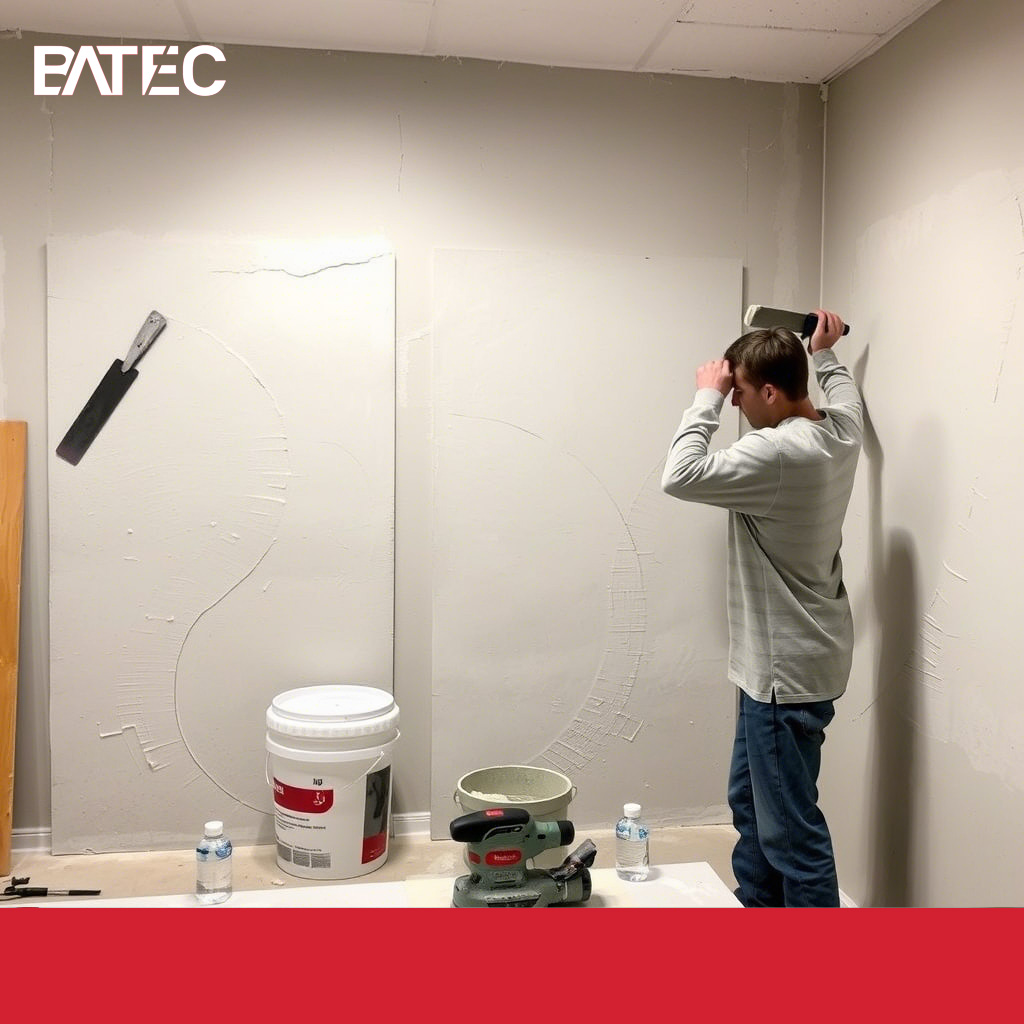
Finishing involves applying joint compound in layers, embedding paper tape over seams, and sanding between coats. It’s crucial to apply even pressure and maintain a clean workspace to avoid dust contamination. Batec recommends using compatible joint compounds and finishing products from their comprehensive system to ensure optimal performance and durability.
Once finished, allow the compound to cure completely before painting or adding finishes. This foundational guide ensures that even first-time installers can achieve professional results when working with gypsum boards, especially those offered by Batec Group.
Step-by-Step Guide to Cutting Gypsum Boards Safely and Accurately
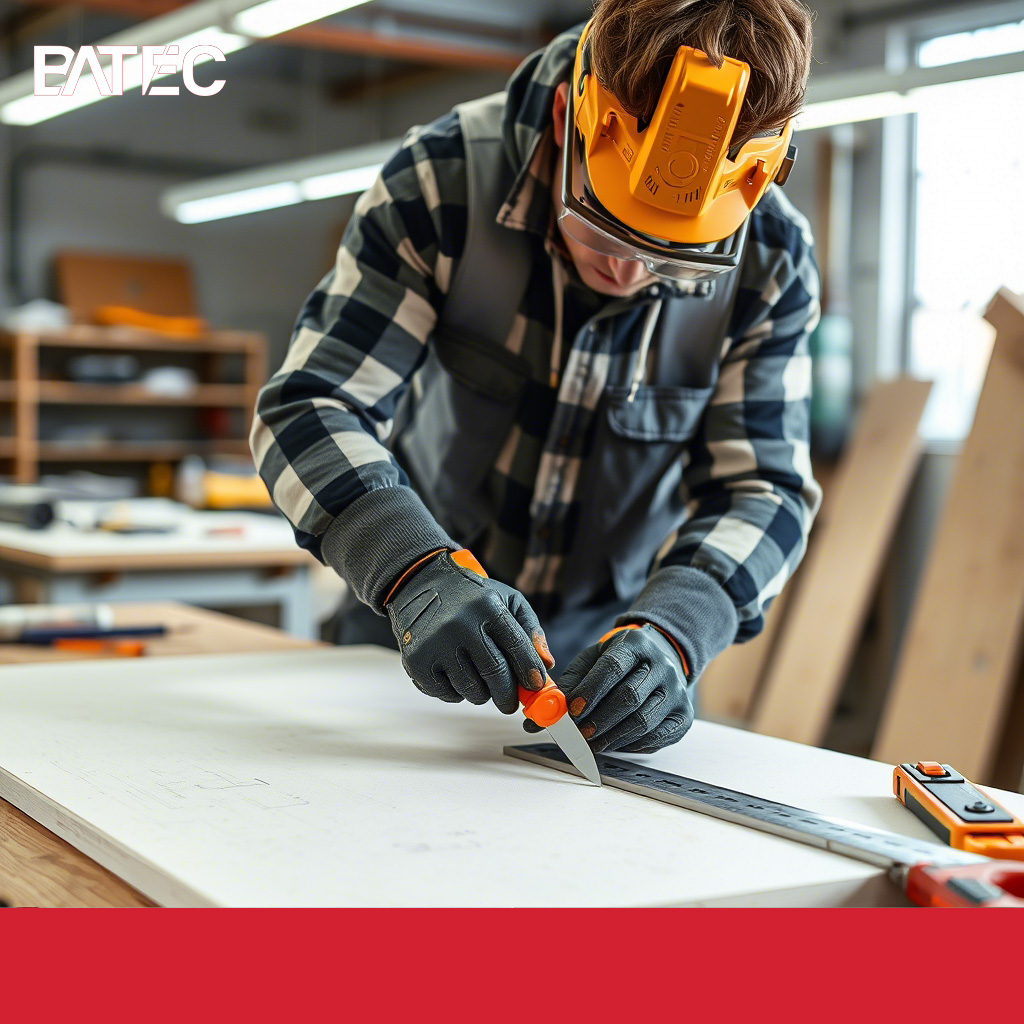
Cutting gypsum boards accurately is one of the most important steps in ensuring a neat finish and minimizing waste. Begin by measuring the area where the board will be installed and marking the cut line clearly using a pencil and straightedge. For best results, use a utility knife to score the surface along the line, then snap the board back gently to break it cleanly.
After breaking the board, cut through the paper backing on the reverse side to complete the cut. For curved cuts or notches around electrical boxes, use a drywall saw or a keyhole saw. When working with Batec gypsum boards, always wear appropriate protective gear such as gloves and goggles to avoid inhaling dust or sustaining cuts from sharp edges.
To reduce mess and improve efficiency, consider using a dustless drywall sander and cutting outdoors or in a well-ventilated space. Precision in cutting not only enhances the aesthetics of the final finish but also reduces the amount of joint compound needed to fill gaps—saving time and material costs.
By mastering proper cutting techniques, both DIYers and professionals can streamline the installation process and achieve clean, professional-looking results—especially when using high-performance gypsum boards like those from Batec Group.
Fixing Gypsum Boards: Best Practices for Secure and Durable Installation
Proper fixing of gypsum boards ensures long-term structural integrity and a smooth finish. Start by identifying the type of framing system you’re working with—metal or wood—then choose the appropriate fasteners. Batec Group recommends using fine-thread drywall screws for metal studs and coarse-thread screws for wooden ones, ensuring strong adhesion without damaging the board’s surface.
Screws should be placed approximately every 15–20 cm along the edges and every 25–30 cm in the field. Make sure the screw heads are slightly countersunk into the board face but not so deep that they tear the paper facing. Over-driving screws can weaken the board and lead to future cracking.
It’s also important to stagger the joints between adjacent rows of boards to prevent alignment issues and enhance stability. Use a drywall lift for large panels to avoid strain and ensure precise placement. Batec gypsum boards are designed to be lightweight yet durable, making them easier to handle during installation while ensuring robust performance.
Finally, double-check that all boards are level and flush with the framing. Correct any misalignments before moving on to the taping and mudding phase. Following these best practices ensures a robust installation that supports long-lasting interior finishes.
Taping and Mudding: A Comprehensive Finishing Guide
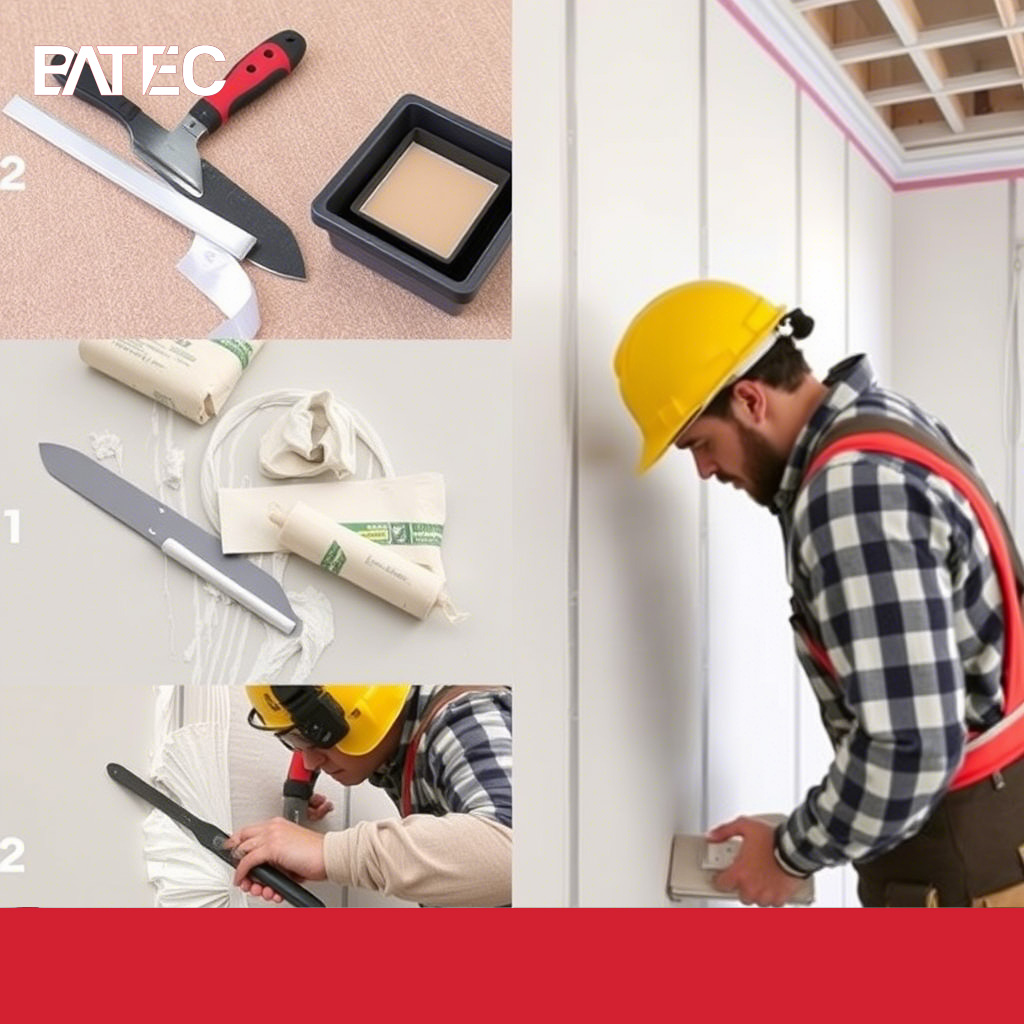
Taping and mudding are critical stages in achieving a seamless finish after installing gypsum boards. Start by cleaning the surface of dust and debris. Apply a thin layer of joint compound over the seams using a 6-inch taping knife, then embed paper tape into the compound, smoothing it carefully to remove air bubbles.
Apply a second coat with a wider knife (10–12 inches), covering the tape entirely while feathering the edges. Allow this layer to dry fully before sanding lightly with fine-grit sandpaper. Repeat this process for a third coat if necessary, depending on the desired smoothness.
For inside corners, use corner tape and apply two to three layers of compound, sanding between coats. Batec Group recommends using their compatible joint compounds and finishing kits for optimal drying times, superior adhesion, and a flawless final appearance.
When done correctly, taping and mudding create a flat, paint-ready surface that enhances the aesthetic appeal of walls and ceilings. Whether you’re a beginner or a seasoned pro, following this guide ensures a polished finish that stands the test of time.
Common Mistakes in Gypsum Board Installation and How to Avoid Them
One of the most common mistakes in gypsum board installation is improper screw placement. Screws that are too far apart may cause sagging or cracking, while over-driving them can damage the board’s surface. To avoid this, always follow Batec Group’s clear guidelines on screw spacing and depth, ensuring secure and durable fastening.
Another frequent error is rushing the finishing process. Applying joint compound before the previous layer has dried can lead to bubbling, peeling, or uneven surfaces. Patience is key—allow each coat to cure fully before sanding or applying the next.
Improper cutting and fitting also contribute to poor results. Attempting to force a board into place instead of trimming it precisely can result in gaps and weak seams. Use a utility knife and straightedge for clean, accurate cuts, especially when working with Batec gypsum boards, which are precision-engineered for dimensional accuracy.
Lastly, ignoring ventilation and safety precautions can affect both health and work quality. Always wear masks, eye protection, and gloves, and ensure good airflow when sanding or cutting. Avoiding these common mistakes leads to better outcomes and more professional results.
Using Tools Effectively: Must-Have Equipment for Drywall Installation
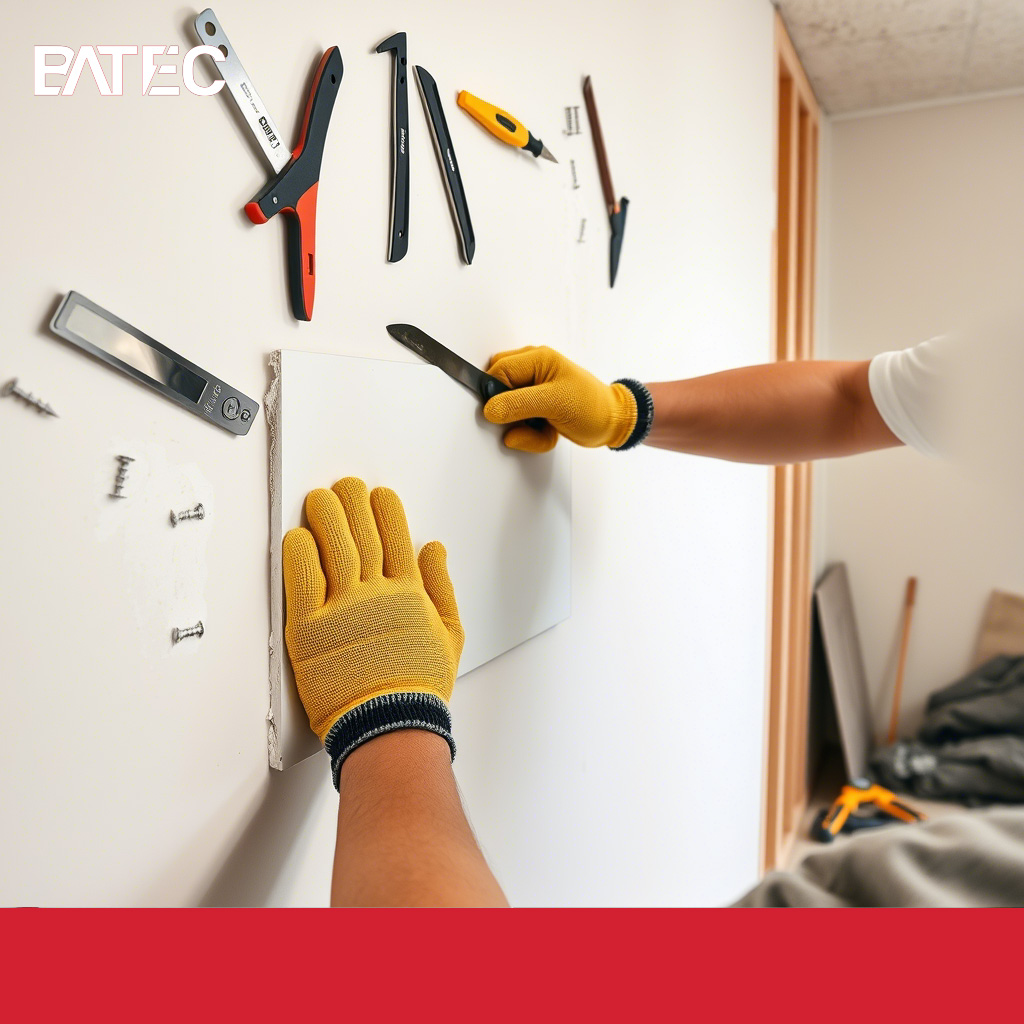
Having the right tools is essential for efficient and professional gypsum board installation. Essential tools include a drywall lift, screw gun, utility knife, taping knives (6″, 8″, and 12″), sanding block or electric sander, and a laser level. Using a drywall lift, especially when installing large panels, prevents injury and ensures precision.
A screw gun fitted with a depth gauge helps avoid over-driving screws, which can damage the board surface. A utility knife is indispensable for scoring and cutting boards, while taping knives are used for spreading joint compound smoothly over seams and corners.
A laser level simplifies alignment and ensures that boards are installed straight, particularly useful when working on ceilings or tall walls. Batec Group recommends pairing their gypsum boards with compatible tools and accessories from their system to maximize efficiency, ensure proper installation, and minimize rework.
Investing in quality tools not only improves productivity but also enhances the final finish. Whether you’re a DIYer or a contractor, having the right equipment streamlines the installation process and leads to better results.
How to Finish Walls Like a Pro: Techniques for a Flawless Surface
Achieving a flawless finish requires attention to detail and proper technique. Start by selecting the right type of joint compound—lightweight all-purpose is ideal for beginners, while professionals often prefer setting-type compound for faster drying and less shrinkage.
Apply the first coat generously, pressing firmly to embed the paper tape. Smooth the excess compound outward to create a flat surface. Once dry, sand lightly and apply a second, wider coat. Repeat if necessary, gradually increasing the width of the knife with each pass.
Use a wide trowel to blend the compound into the surrounding surface, ensuring a seamless transition between the seam and the board. For best results, use Batec Group’s recommended finishing materials, which are formulated for easy application, optimal bonding, and long-lasting durability, ensuring consistency you can count on for a superior finish.
Finally, prime the entire surface before painting. This step seals the compound and provides an even base for the final coat. With practice and the right approach, anyone can achieve a professional-grade finish that enhances the beauty and value of any interior space.
From Concept to Completion: Building Your First Gypsum Wall with Batec Products
Building a full gypsum wall from scratch involves careful planning, thorough preparation, and precise execution. Begin by designing the layout and sourcing your materials. Batec Group offers a comprehensive range of gypsum boards suitable for different applications—from standard partitions to specialized fire-resistant (BATEC Gboard FR) or moisture-resistant (BATEC Gesso MR H2) walls, ensuring you have the right product for your specific needs.
Frame the wall using either metal or wood studs, ensuring vertical alignment and stability. Install insulation if required, then begin hanging the gypsum boards starting from the top down. Use the correct fasteners and spacing to secure the boards firmly.
Next, proceed with taping and mudding the seams, applying multiple coats and sanding between each to achieve a smooth, seamless surface. Prime and paint the surface once the compound is fully dry. Throughout the entire process, refer to Batec Group’s detailed installation guides and readily available support resources to ensure best practices are followed, making your job easier, not harder.
Completing your first gypsum wall is a rewarding experience that opens the door to more advanced projects. By following this guide and using high-quality products from Batec Group, even beginners can build walls that are both functional and aesthetically pleasing, delivering on the promise of “Global Standards, Regional Delivery.
Breakthrough in Gypsum Composite Technology: Enhanced Fire Resistance Through Nanoparticle Integration (2025)
In early 2025, researchers at a leading materials science institute published findings on a new composite gypsum board formulation that integrates silica-based nanoparticles into the core structure. These particles improve thermal resistance by forming a protective barrier when exposed to high temperatures, significantly delaying structural breakdown during fire exposure.
The study demonstrated that boards infused with nano-silica showed up to 30% improvement in fire endurance, maintaining integrity for over 90 minutes under standard testing conditions. This breakthrough could lead to the development of thinner, lighter fire-rated boards without compromising crucial safety performance.
This development is particularly relevant for multi-story buildings, hospitals, and public infrastructure where fire safety remains a top priority. Manufacturers and suppliers, including Batec Group, can benefit from integrating these findings into product R&D or marketing materials focused on advanced safety compliance, building upon their existing range of high-performance fire-resistant boards (like BATEC Gboard FR).
As building codes continue to evolve globally, this innovation underscores the importance of investing in scientific advancements to meet future regulatory standards and offer superior fire protection solutions.
New Research Shows Gypsum Powder Can Improve Soil Health in Arid Regions (2025)
A 2025 agricultural study conducted by an international team of environmental scientists revealed that gypsum powder, traditionally used in construction, has significant potential to improve soil quality in arid and saline environments.
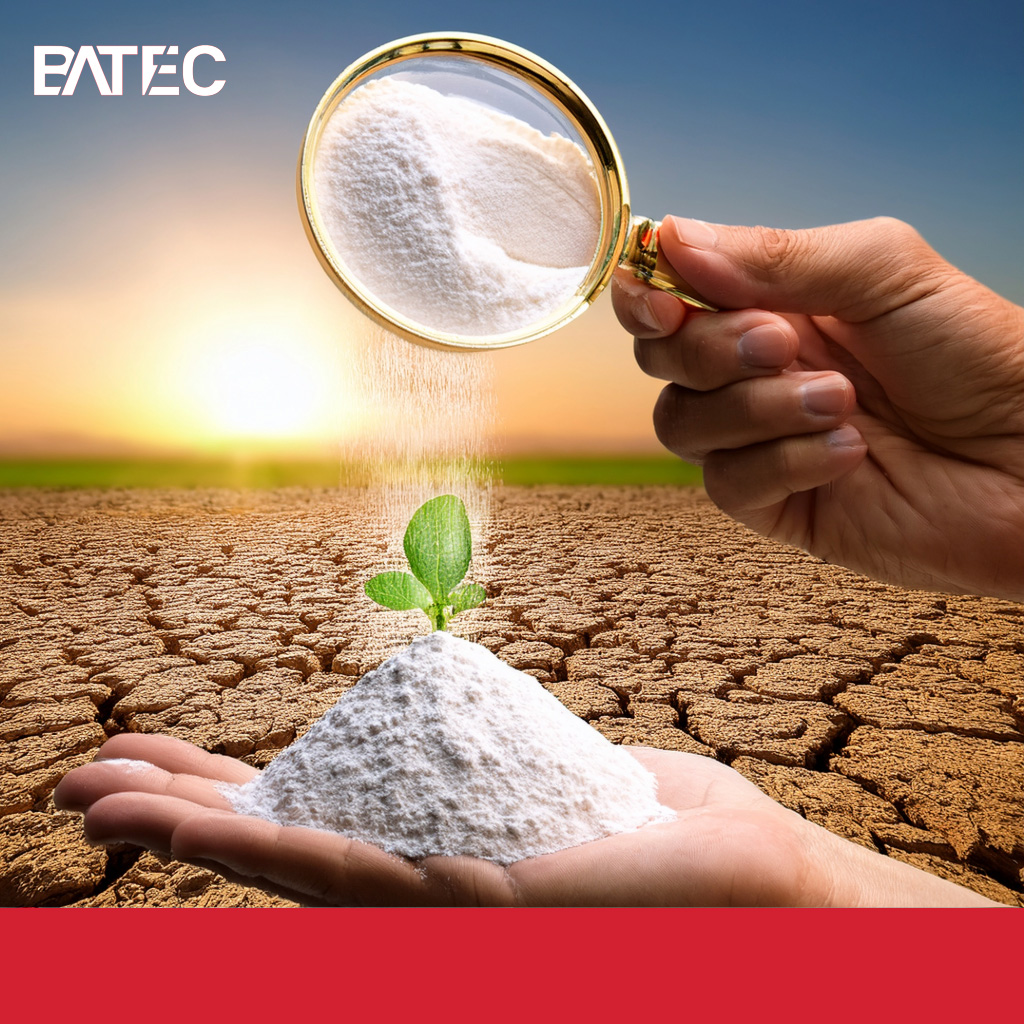
When applied as a soil amendment, gypsum helps reduce soil compaction, enhance water infiltration, and remove excess sodium—an issue commonly found in dryland farming regions. The study found yield improvements of up to 25% in wheat and barley crops grown in treated soils.
This dual-use potential opens new markets for gypsum producers and aligns with global sustainability goals, especially in regions facing desertification and water scarcity. It also presents an opportunity for companies to promote eco-friendly applications of their products beyond the construction sector. For a company like Batec Group, known for its high-quality gypsum powder, this research highlights a significant avenue for contributing to agricultural sustainability and expanding their product’s impact beyond building materials.
As interest in circular economy practices grows, gypsum’s role in agriculture could become a key talking point in sustainability reports and industry discussions.
Recycling Gypsum Waste: Breakthrough in Efficient Separation Techniques (2025)
In 2025, a major breakthrough was announced in the field of gypsum recycling: a new mechanical separation method allows for the efficient removal of paper and contaminants from used drywall waste, increasing the purity of recovered gypsum to over 95%—a level suitable for reuse in new board production.
Traditional recycling methods often resulted in contamination issues, limiting the usability of recycled material. The new process uses advanced air classification and electrostatic separation techniques, making large-scale recycling more viable and cost-effective.
This advancement significantly supports global efforts toward sustainable construction and reduces reliance on virgin gypsum resources. As landfill bans on gypsum waste expand across Europe and the Middle East, such innovations will be critical for compliance and supply chain resilience. For Batec Group, this breakthrough reinforces their commitment to environmental responsibility and facilitates their exploration of new partnerships with regional recycling firms, aligning with their goal of sustainable practices in gypsum production.
For companies producing or distributing gypsum products, staying informed about these advanced recycling technologies enhances credibility and positions them as leaders in environmental responsibility.
Smart Gypsum Boards: Embedding Sensors for Real-Time Environmental Monitoring (2025)
In a groundbreaking 2025 development, researchers demonstrated how gypsum boards can be embedded with ultra-thin sensors capable of monitoring temperature, humidity, and air quality within indoor spaces.
These smart boards offer real-time data transmission to building management systems, enabling automated adjustments to HVAC settings and improving energy efficiency and occupant comfort. Early prototypes were tested in university labs and showed promising results in signal accuracy and sensor longevity.
Such innovations are paving the way for intelligent building materials that actively contribute to health, safety, and sustainability goals. They also open new opportunities for integration with IoT-enabled smart homes and commercial environments. As a producer of high-quality gypsum boards, Batec Group is positioned to provide the foundational material for these future smart applications, ensuring their products meet the rigorous demands of next-generation building technologies.
While commercialization may still be several years away, awareness of these developments can position companies as forward-thinking partners in next-generation construction solutions.
Thermal Insulation Properties of Modified Gypsum Boards Prove Energy Efficiency Potential (2025)
A 2025 thermal performance study conducted by a European university revealed that gypsum boards modified with aerogel particles or phase-change materials (PCMs) demonstrate significantly improved insulation properties compared to standard boards.
These modifications allow for better regulation of indoor temperatures, reducing the need for artificial heating and cooling. In lab tests, PCM-integrated boards reduced indoor temperature swings by up to 4°C, enhancing comfort and lowering energy consumption.
With rising energy costs and stricter carbon regulations, these findings support the use of gypsum not only as a structural material but also as a significant contributor to passive building design strategies. For Batec Group, these scientific advancements offer a compelling narrative for product differentiation, allowing them to highlight the energy efficiency potential of their high-quality gypsum boards and contribute to greener building certifications like LEED and BREEAM.
As green building certifications like LEED and BREEAM emphasize energy performance, such scientific advancements offer compelling narratives for product differentiation and educational outreach.
Gypsum Board Acoustics: New Studies Show Improved Sound Absorption with Textured Core Design (2025)
Acoustic performance of gypsum boards received attention in 2025, with new research showing that modifying the internal core structure—such as introducing microchannels or porous textures—can significantly enhance sound absorption.
Laboratory tests confirmed that boards with textured cores absorbed up to 25% more low-frequency noise, making them ideal for use in office partitions, home theaters, and healthcare facilities where noise control is essential.
This discovery offers manufacturers a path to developing specialized acoustic boards without relying heavily on additional materials like mineral wool or foam layers, potentially reducing costs and simplifying installation. Batec Group, recognized for its commitment to high-performance building solutions, can leverage these scientific insights to further enhance the acoustic properties of its gypsum boards, meeting the growing demand for quieter, more comfortable interiors in both residential and commercial settings.
Understanding and promoting these scientific insights can help companies meet growing demand for quiet, comfortable interiors in both residential and commercial settings.
Advancements in Lightweight Gypsum Boards: Reducing Material Density Without Sacrificing Strength (2025)
In 2025, researchers introduced a novel approach to manufacturing lightweight gypsum boards by incorporating microspheres made of recycled glass into the core mix. These hollow spheres reduce density while maintaining compressive strength and dimensional stability.
Initial trials showed that the new formulation could reduce board weight by up to 30%, making handling and transportation easier without compromising structural integrity or finish quality.
This development is particularly valuable in modular construction, high-rise buildings, and renovation projects where minimizing load on structures is crucial. It also supports labor efficiency and worker safety during installation. As a leading manufacturer of gypsum boards in the Middle East, Batec Group can explore incorporating such innovative lightweight technologies into their production, enhancing their product range to meet the evolving needs of modern, efficient, and sustainable construction practices.
As construction timelines shorten and sustainability pressures increase, lightweight gypsum boards are expected to gain traction globally. Staying informed about such trends allows companies to maintain relevance and competitiveness.